Some books don’t just entertain. They build the foundation everything else stands on and that’s just what Golden Age science fiction books did.
The Golden Age of science fiction ran roughly 1938 through the early 1960s, with roots trailing back further and branches reaching forward and produced the books that defined what science fiction could be. Not just as entertainment, though these books are enormously entertaining. As a way of thinking about humanity, technology, society, and the future.
These are the books that writers read before they became writers. The books that engineers, scientists, and philosophers have cited as formative. The books that showed up in used bookstore bags and library sales and sparked lifelong reading habits in people who didn’t know they were science fiction readers yet.
This list covers 25 of the most essential Golden Age science fiction books. Some are famous enough that you’ve heard of them even if you haven’t read them. Others are less discussed today but were genre-defining in their moment and deserve your attention now.
A note on dates and scope: The Golden Age purist window runs roughly 1938 to 1959. You’ll find books here published outside that range… H.G. Wells from 1898 because you cannot talk about classic science fiction without him, and a few titles from the early 1960s and beyond because the Golden Age sensibility didn’t expire on a fixed date. Where a book sits outside the traditional window, I’ll say so and explain why it belongs anyway.
Start anywhere. But start.
New to collecting these in their original editions? Start with our complete beginner’s guide before you go hunting.
 |
 |
 |
 |
 |
The Foundational Five
If you read nothing else on this list, read these. They define the era and the genre’s enduring concerns: the rise and fall of civilizations, the ethics of machine intelligence, the fragility of culture, and humanity’s place in a universe that doesn’t care about us.
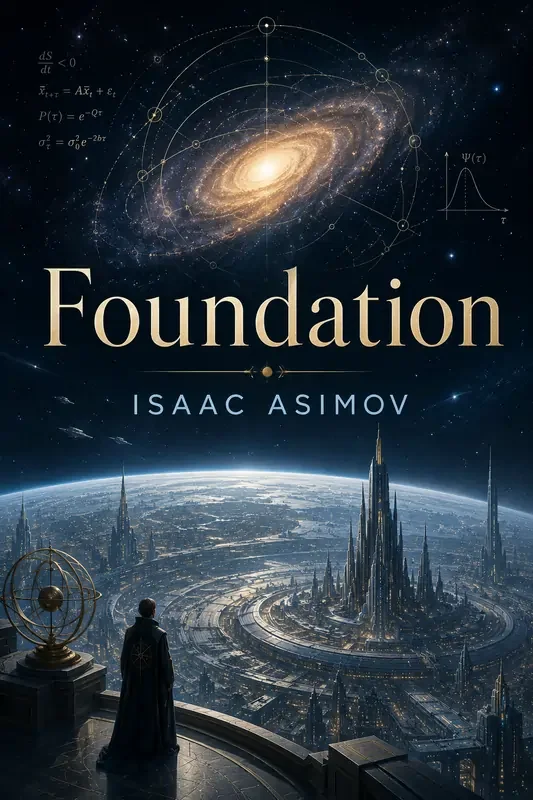
1. Foundation — Isaac Asimov (1951)
The book that invented a template for science fiction storytelling that writers are still using today.
Asimov’s Foundation begins with a premise so audacious it shouldn’t work: a mathematician named Hari Seldon has used psychohistory — the statistical prediction of large-scale human behavior — to calculate that the Galactic Empire is going to collapse, plunging humanity into thirty thousand years of barbarism. Unless someone intervenes. The story that follows spans centuries, civilizations, and generations of characters, none of whom appear for more than a chapter or two before the narrative jumps forward in time.
What makes Foundation remarkable isn’t the scale, though the scale is extraordinary. It’s the ideas. Asimov is asking serious questions about determinism, free will, the nature of civilization, and whether history can be engineered. He’s doing it in prose that moves like a freight train and never loses sight of the fact that this needs to be readable.
The original Foundation is actually three linked novellas published in Astounding Science Fiction between 1942 and 1944, collected and expanded into novel form in 1951. Read it first. Then decide if you want to follow Asimov down the rabbit hole of sequels and prequels… it goes deep.
What to expect: Big ideas, episodic structure, characters who serve the story’s intellectual architecture rather than emotional realism. This is not a character-driven novel. It is an ideas-driven one. That’s exactly what it should be.
Edition: Del Rey or Spectra paperback. Paperback on Amazon | Kindle edition
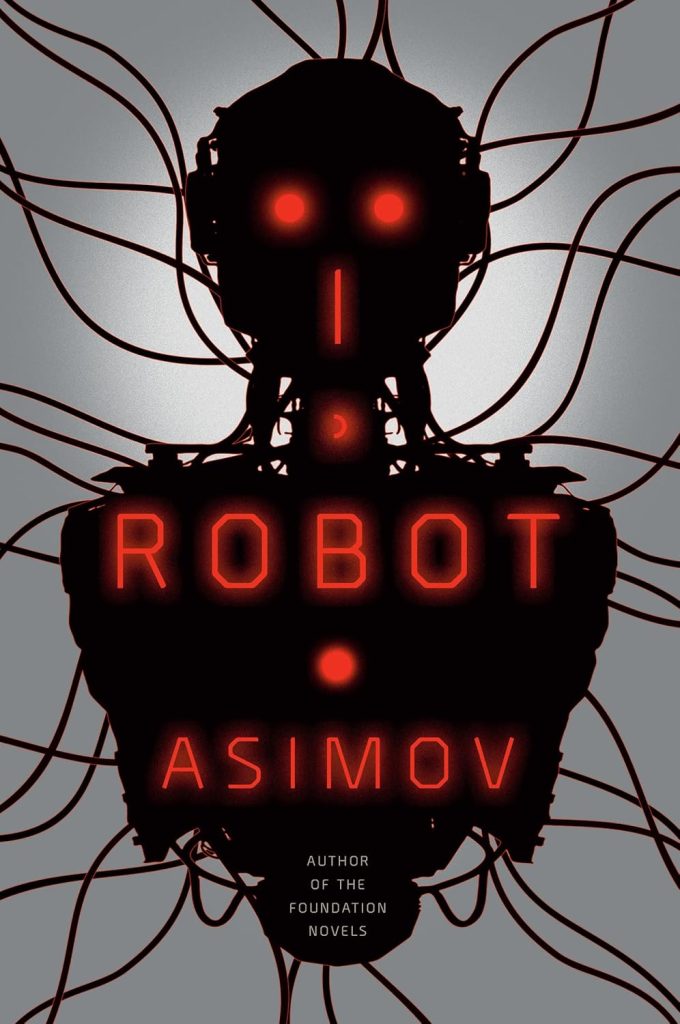
2. I, Robot — Isaac Asimov (1950)
Nine stories that invented the vocabulary we still use to talk about artificial intelligence.
Before I, Robot, robots in science fiction were either servants or monsters. Asimov saw something more interesting: a species of intelligence defined by rules — the Three Laws of Robotics — and then spent nine stories methodically exploring every paradox, edge case, and philosophical implication those rules create.
This is science fiction as logic puzzle, and Asimov is extraordinarily good at it. Each story takes a single conceptual problem and works it through to its conclusion with the rigor of a mathematician and the storytelling instincts of someone who genuinely loves surprising his reader. The framing device — robot psychologist Susan Calvin narrating her career to a journalist — gives the collection an elegance and emotional continuity that most short story collections never achieve.
I, Robot is also historically important in a way that’s easy to underestimate. The Three Laws of Robotics have influenced AI ethics discussions, philosophy of mind debates, and robot design principles in ways that extend far beyond science fiction. Reading this book is reading the source code of how we think about machine intelligence.
What to expect: Short stories, not a novel. Linked by character and theme but episodic in structure. Each story works as a standalone. Read it straight through or dip in and out… both work.
Edition: Del Rey paperback. Paperback on Amazon | Kindle edition
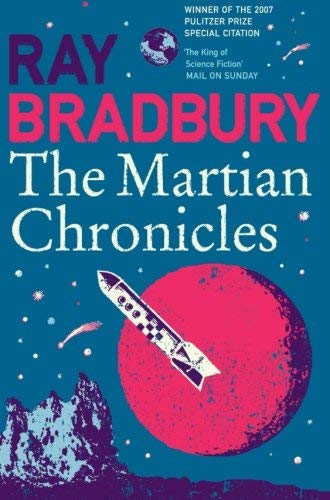
3. The Martian Chronicles — Ray Bradbury (1950)
Not really science fiction. Not really a novel. Entirely essential.
Bradbury himself resisted the science fiction label, and reading The Martian Chronicles you understand why. The Mars he imagines is not a scientifically accurate Mars… it’s a symbolic landscape, a canvas for meditations on colonialism, nostalgia, loneliness, the destruction of indigenous cultures, and the peculiar sadness of human expansion.
The book is structured as linked vignettes following successive waves of Earth expeditions to Mars, each one revealing something different about who we are when we encounter the genuinely alien. The Martians themselves — telepathic, ancient, melancholy — are among the most quietly heartbreaking creations in American literature.
What Bradbury does that almost nobody else does: he makes science fiction feel like poetry. The prose has a cadence and a melancholy that stays with you long after the specific plots have faded. This is the book you give to someone who thinks they don’t like science fiction.
What to expect: Linked short stories with a cumulative emotional impact. Lyrical prose. Themes that are more literary than genre. Don’t look for hard science… it’s not here and it was never the point.
Edition: HarperFiction paperback. Paperback on Amazon | Kindle edition
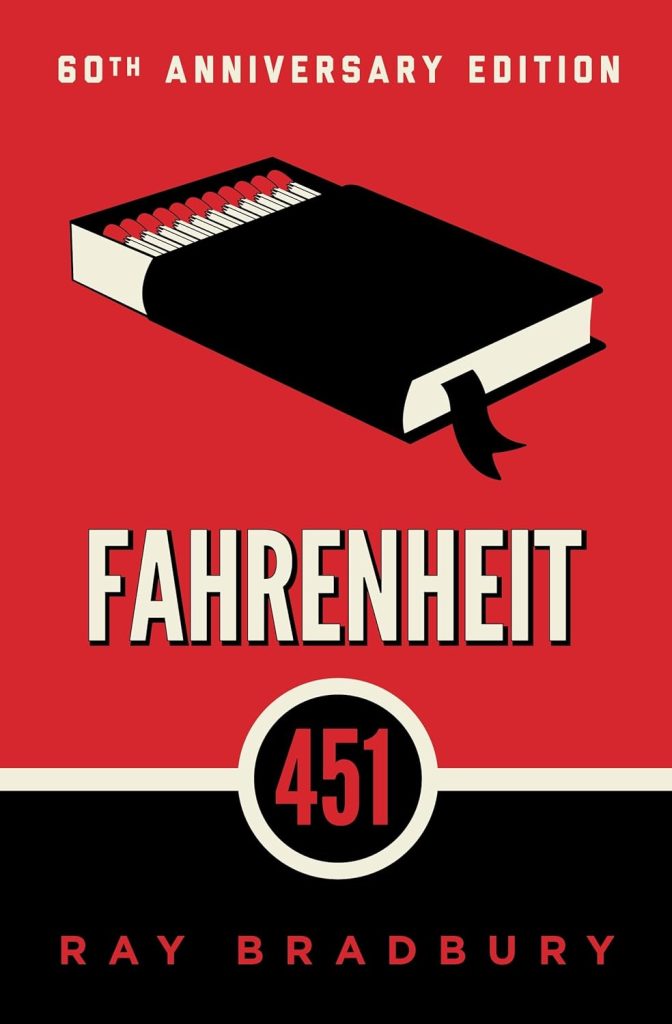
4. Fahrenheit 451 — Ray Bradbury (1953)
The book about burning books that became one of the most banned books in America. Bradbury would have appreciated the irony.
Guy Montag is a fireman. In this future, firemen don’t put out fires… they start them. Specifically, they burn books, because books make people unhappy by encouraging them to think. Montag has never questioned this until he meets a teenage girl named Clarisse who asks him if he’s happy.
Fahrenheit 451 is a short novel — closer to a novella — that hits harder than books three times its length. Bradbury isn’t writing a distant dystopia. He’s writing about something he saw happening around him in 1953: television replacing conversation, conformity replacing thought, the slow comfortable slide toward a world where nothing difficult is permitted.
The warning hasn’t aged. If anything it’s sharpened.
What to expect: Short and propulsive. More emotional than intellectual. Some of Bradbury’s most visceral prose. Reads in a single sitting.
Edition: Simon & Schuster paperback. Paperback on Amazon | Kindle edition
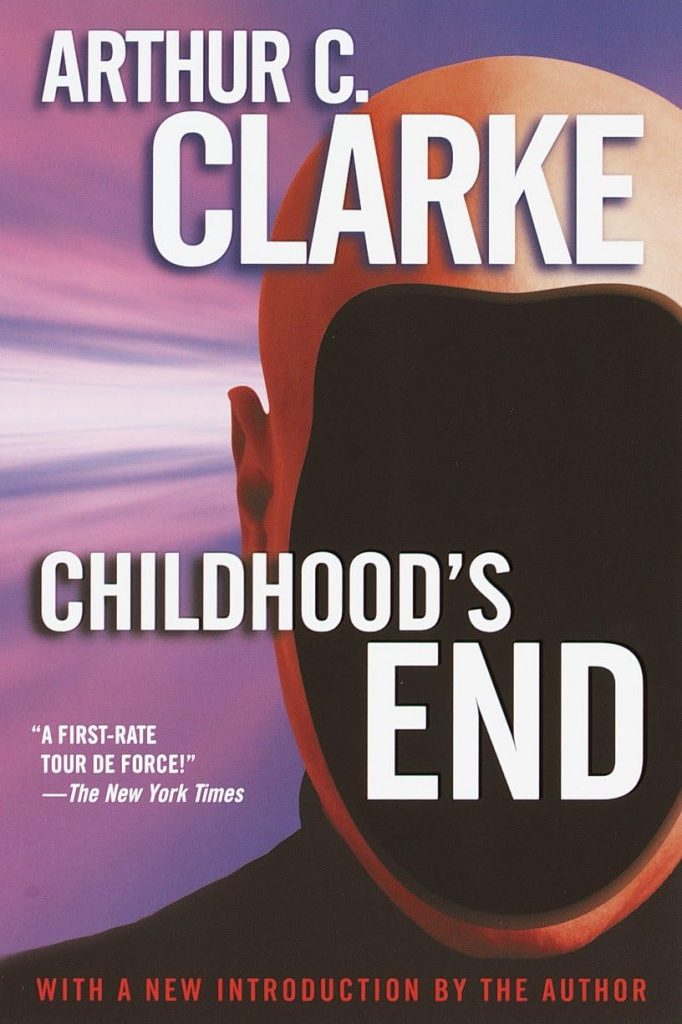
5. Childhood’s End — Arthur C. Clarke (1953)
The most quietly devastating first contact novel ever written.
The Overlords arrive above Earth’s cities without warning, their ships hanging motionless in the sky. They bring peace, prosperity, and an end to war. Humanity flourishes under their benevolent supervision. The catch — and there is always a catch in Clarke — takes fifty years to reveal itself, and when it does, it reframes everything that came before.
Clarke is working at the intersection of science fiction and genuine philosophy here. Childhood’s End asks what it means for a species to evolve beyond itself — and whether that evolution is something to celebrate or mourn. The ending is one of the most ambitious in the genre, the kind of ending that makes you put the book down and sit quietly for a while.
This is Clarke at his most humane. The science is subordinate to the ideas, and the ideas are enormous.
What to expect: Slow build, patient storytelling, a payoff that earns every page that preceded it. This is not an action novel. It’s a meditation with a plot.
Edition: Del Rey paperback. Paperback on Amazon | Kindle edition
Heinlein’s Essential Run
Robert Heinlein dominated the era more than any other single writer, and his work shifted dramatically across three decades—from disciplined military SF to countercultural provocation. These three show the range.
 |
 |
 |
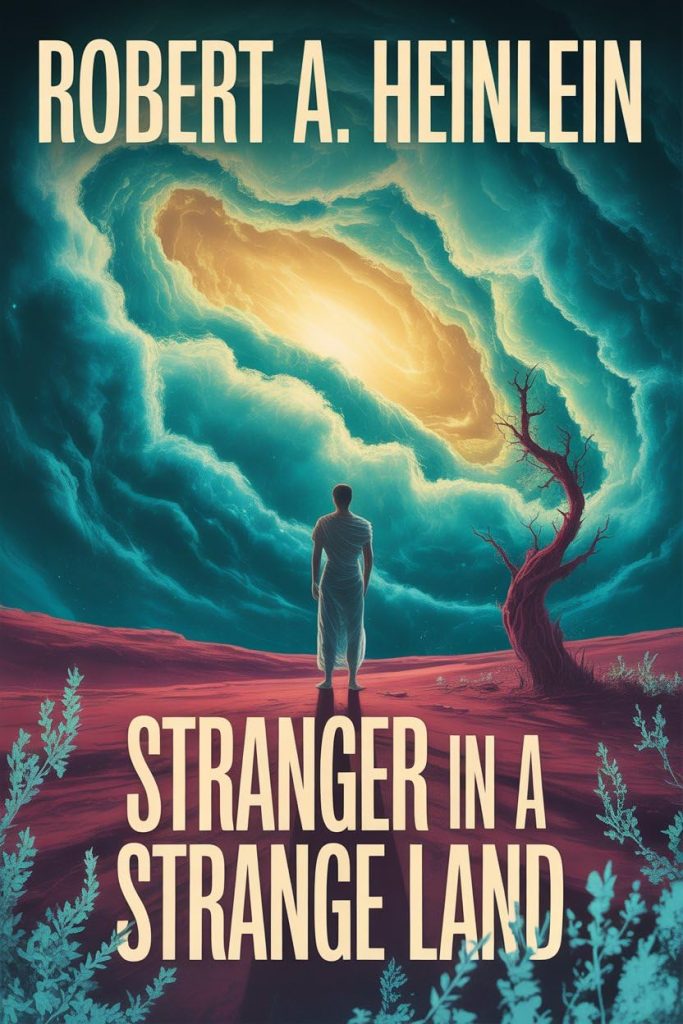
6. Stranger in a Strange Land — Robert Heinlein (1961)
Technically post-Golden Age, but Heinlein is so central to the era that this belongs on any list bearing his name. Valentine Michael Smith is a human raised by Martians, returned to Earth as an adult with no framework for understanding human society, religion, sexuality, or violence.
Heinlein uses Smith’s alien perspective to interrogate every social assumption he can find — and in 1961, that made this book scandalous. It became the defining counterculture novel of the 1960s despite being written by a man who was politically conservative in many respects. That contradiction is part of what makes it endlessly interesting.
It’s also long, and the second half loses some of the first half’s momentum. Worth it anyway. Heinlein at his most ambitious and most provocative.
Why it matters: Won the Hugo Award and became one of the best-selling science fiction novels ever published. The uncut original manuscript edition (1991) restores material the original publisher cut.
Edition: Ace or Berkley paperback (cut edition) or restored uncut edition. Paperback on Amazon | Kindle edition
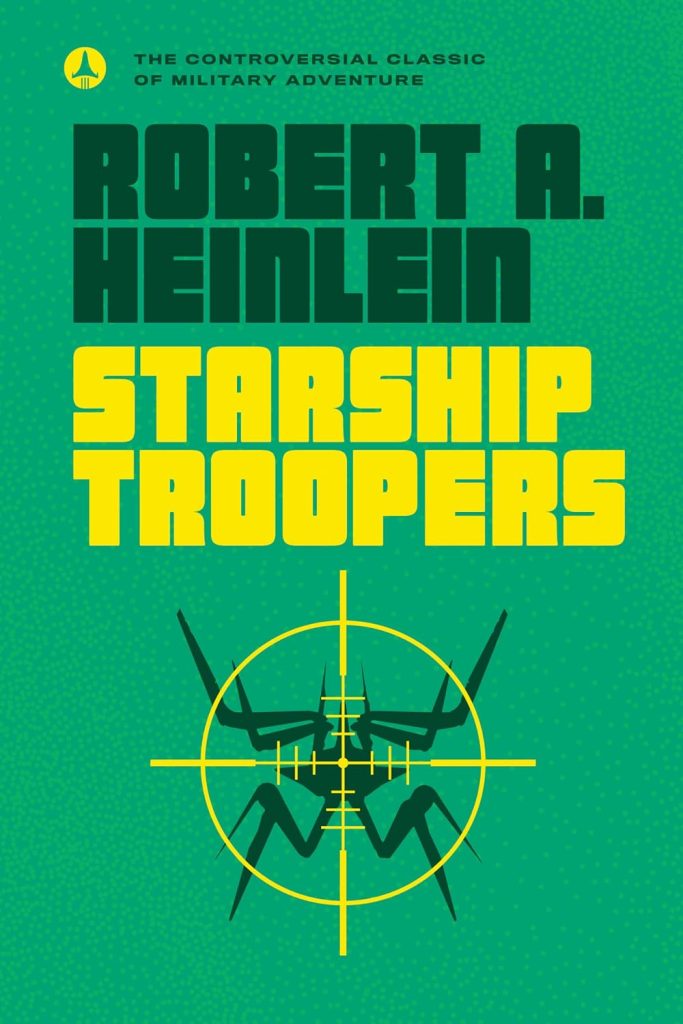
7. Starship Troopers — Robert Heinlein (1959)
The novel that earned Heinlein his fourth Hugo Award and made English teachers deeply uncomfortable. On the surface it’s a military science fiction novel about interstellar war with alien insects. Underneath it’s a sustained philosophical argument about citizenship, civic virtue, violence, and the obligations of the individual to society.
Heinlein means every word of it. Whether you agree with him or not — and plenty of readers don’t — the argument is rigorous and the storytelling is propulsive. Read it as a provocation. Engage with it seriously. That’s what Heinlein wanted.
The 1959 Signet paperback is the classic edition. Recognizable, affordable, and exactly the right physical object for this particular book.
Why it matters: Won the Hugo Award. One of the most politically debated novels in the genre’s history, still assigned and still argued about.
Edition: Ace paperback. Paperback on Amazon | Kindle edition
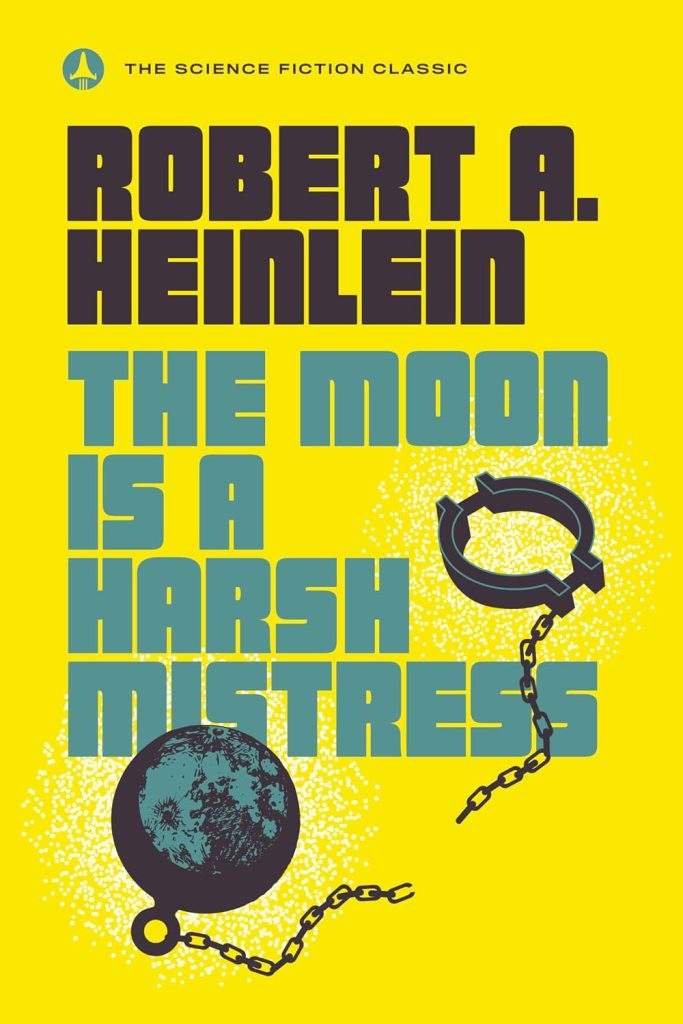
8. The Moon Is a Harsh Mistress — Robert Heinlein (1966)
The third Heinlein on this list and the one that completes the picture of what he was doing across his career. A lunar colony revolt against Earth governance, narrated by a one-armed computer technician named Manny, with a sentient computer named Mike providing both strategic genius and unexpected heart.
Heinlein’s libertarian politics are fully on display here — this is his most sustained argument for individual liberty and decentralized governance. It’s also his most novelistically accomplished work: the three-way relationship between Manny, Professor Bernardo de la Paz, and Wyoming Knott is genuinely moving, and Mike is one of the most original characters in Golden Age science fiction.
Why it matters: Won the Hugo Award. Considered by many Heinlein readers to be his most fully realized novel—political philosophy wrapped in a genuinely thrilling heist-and-revolution plot.
Edition: Orb Books paperback. Paperback on Amazon | Kindle edition
More Clarke
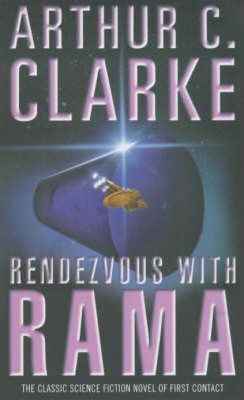 |
9. Rendezvous with Rama — Arthur C. Clarke (1973)
Outside the traditional Golden Age window, but Clarke is working here with the same sensibility that defines his earlier work — rigorous, patient, devoted to the genuine mystery of an indifferent universe.
A cylindrical alien spacecraft enters the solar system. A crew is dispatched to investigate before it passes out of reach. That’s the entire plot, and it’s entirely sufficient. Clarke’s genius is making the investigation itself — the slow methodical exploration of something completely unknown — as gripping as any action sequence. Rama is a monument to the idea that the universe is stranger and larger than we can imagine. Clarke never lets you forget it.
Why it matters: Swept the Hugo, Nebula, Locus, and Campbell awards—a rare quadruple win. The gold standard for the “big dumb object” subgenre.
Edition: Del Rey paperback. Paperback on Amazon | Kindle edition
Essential Standalone Classics
Not every great Golden Age writer built a long series. These are some of the era’s finest single achievements—books that stand entirely on their own.
 |
 |
 |
 |
 |
 |
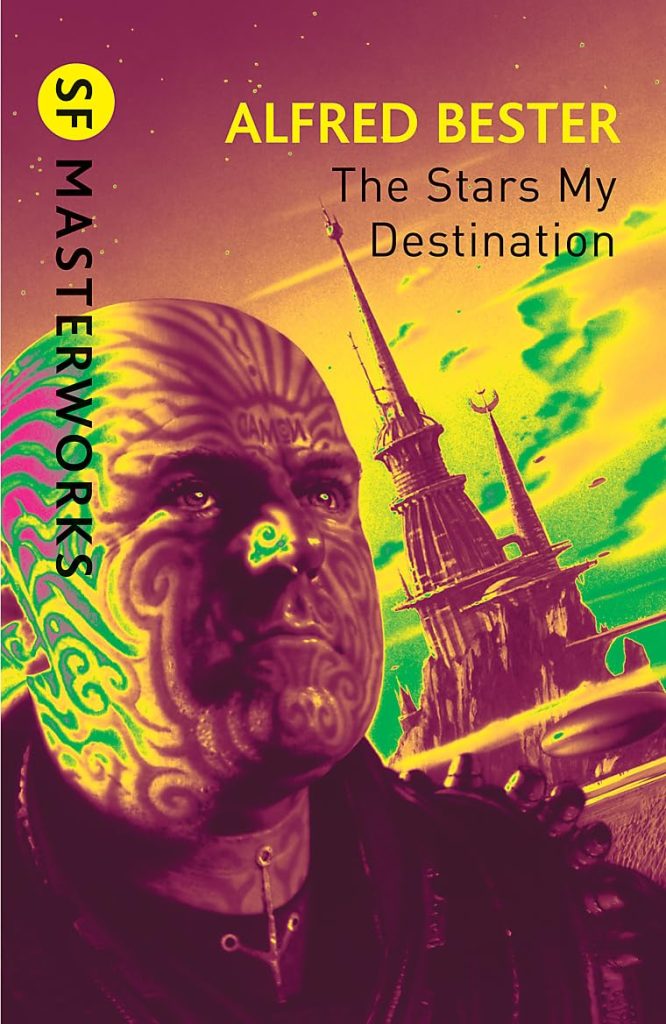
10. The Stars My Destination — Alfred Bester (1956)
The Count of Monte Cristo remixed as a 25th century revenge thriller, written with the kinetic energy of a man who had too many ideas to fit into conventional prose. Gully Foyle is one of the great antiheroes of science fiction — violent, driven, not entirely sympathetic, and utterly impossible to look away from.
Bester is doing things with typography, structure, and narrative pace that feel decades ahead of his time. This book shouldn’t work as well as it does. It absolutely works. If you only read one book from the Essential Sixteen, make it this one.
Why it matters: Often cited as the single best science fiction novel ever written. A relentless, kinetic revenge story that anticipated cyberpunk by three decades.
Edition: Vintage Books paperback. Paperback on Amazon | Kindle edition
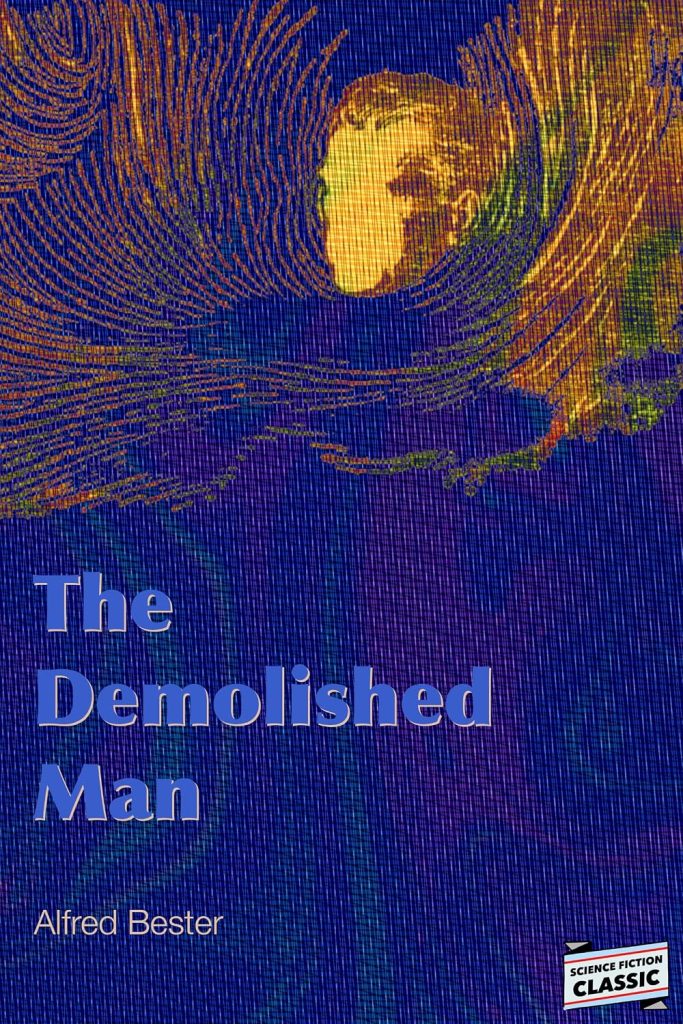
11. The Demolished Man — Alfred Bester (1953)
Bester’s other masterpiece and the first Hugo Award winner for Best Novel (1953). A murder mystery set in a future where telepathic police make premeditated murder virtually impossible. The central question — how do you commit the perfect crime when the detective can read your mind? — drives a plot that crackles with invention and genuine tension.
Bester’s prose is electric. Reading him after a diet of more measured Golden Age prose is like switching from coffee to espresso.
Why it matters: Won the first-ever Hugo Award for Best Novel. A genuinely thrilling police-procedural built on telepathy.
Edition: Vintage Books paperback. Paperback on Amazon | Kindle edition
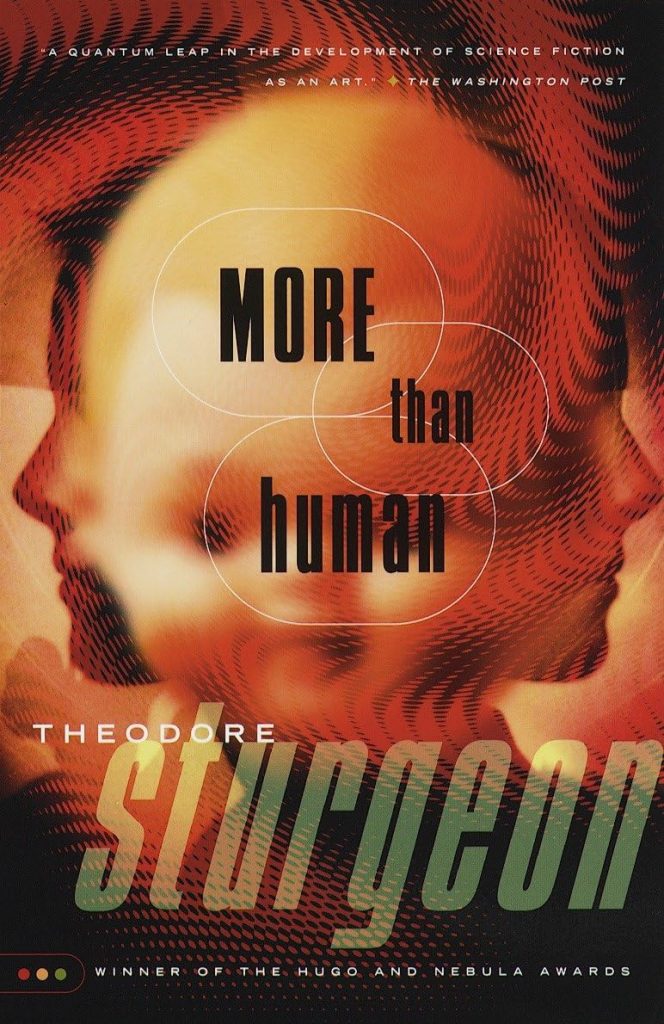
12. More Than Human — Theodore Sturgeon (1953)
Six damaged, outcast individuals — a feral man-child, twin Black girls with telekinetic powers, a telepath, an idiot savant — slowly discover they can function as a single gestalt organism. Together they represent the next step in human evolution. Separately they are lost.
Sturgeon is the Golden Age’s most emotionally sophisticated writer, and More Than Human is his masterwork. The question at its center — what does a new kind of being owe to the humanity it has surpassed? — is handled with a tenderness and moral seriousness that is rare in any genre.
Why it matters: Won the International Fantasy Award. One of the most emotionally generous treatments of “otherness” the genre produced in this era.
Edition: Vintage Books paperback. Paperback on Amazon | Kindle edition
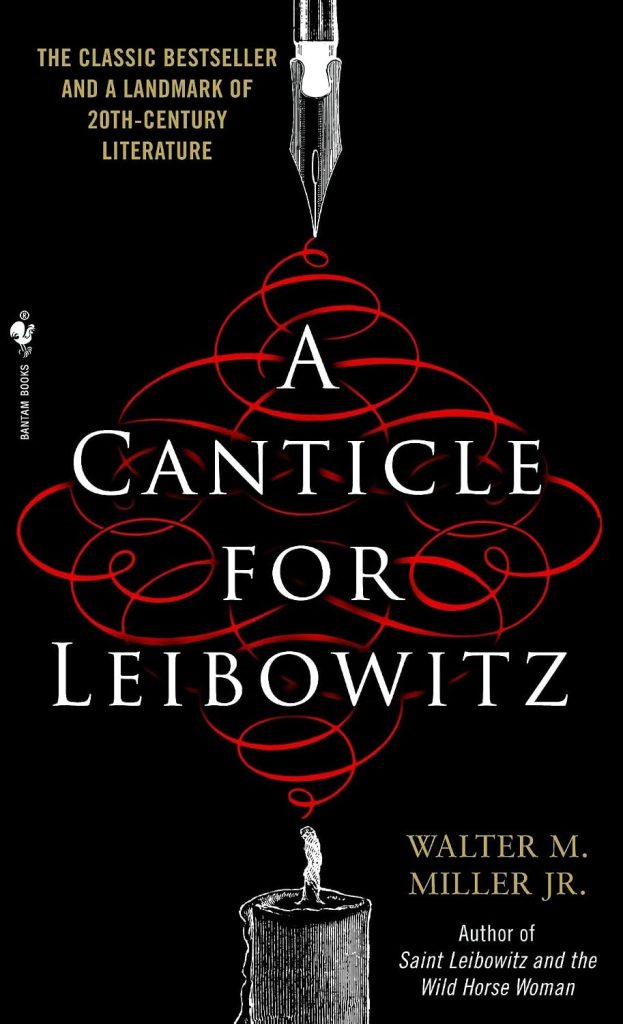
13. A Canticle for Leibowitz — Walter M. Miller Jr. (1959)
Three novellas spanning thousands of years of post-apocalyptic history, centered on a Catholic monastery in the Utah desert that preserves human knowledge through successive dark ages. Miller — a World War II bomber crewman who helped destroy the monastery at Monte Cassino — wrote this as both a meditation on the cyclical nature of human self-destruction and a genuine act of faith.
It’s one of the most unusual books in American science fiction: deeply Catholic, structurally ambitious, darkly funny in places, and heartbreaking in others. There is nothing quite like it.
Why it matters: Won the Hugo Award. A profound meditation on faith, knowledge, and humanity’s apparent compulsion to repeat its own worst mistakes.
Edition: Spectra paperback. Paperback on Amazon | Kindle edition
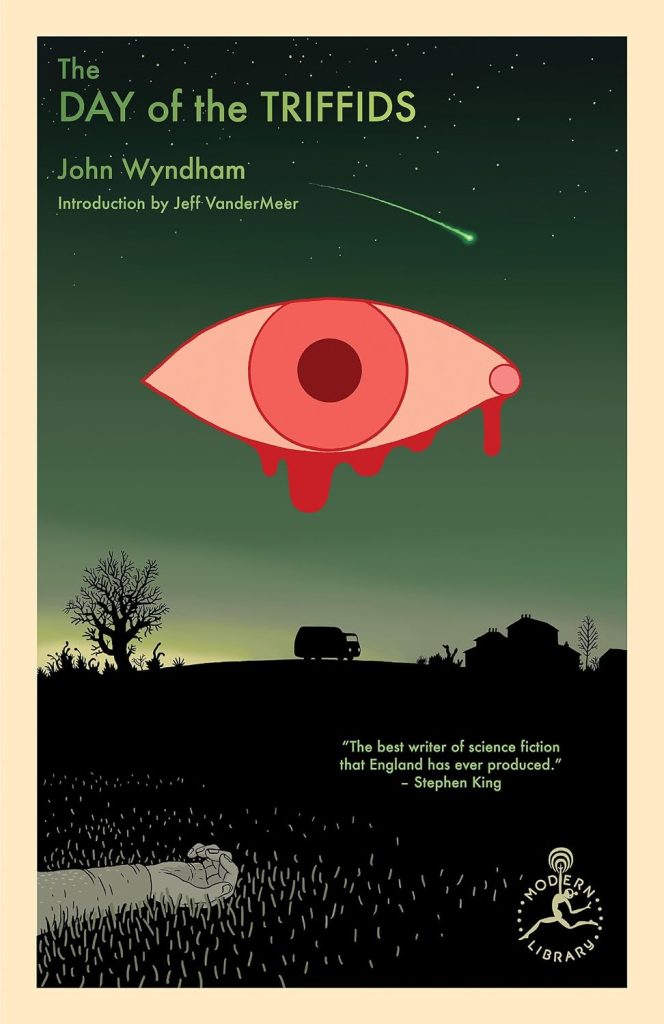
14. The Day of the Triffids — John Wyndham (1951)
A meteor shower blinds almost everyone on Earth overnight. Bill Masen, recovering from an eye operation and thus spared, wakes to find London emptying and large mobile carnivorous plants — triffids — beginning to hunt the blind survivors.
Wyndham’s genius is making catastrophe feel intimate. This isn’t a disaster movie — it’s a quiet, deeply English novel about how civilization actually holds together and what happens when it doesn’t. The triffids themselves are magnificent: genuinely threatening, biologically plausible, and deeply strange.
Why it matters: Defined the British “cozy catastrophe” subgenre and influenced everything from 28 Days Later to The Walking Dead.
Edition: Modern Library paperback. Paperback on Amazon | Kindle edition
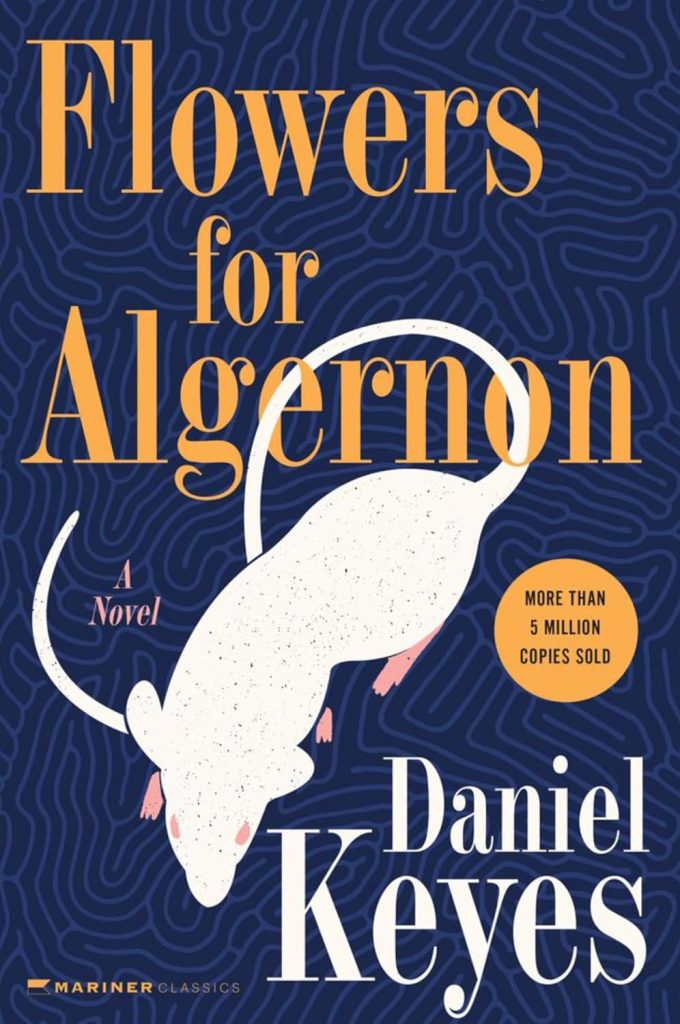
15. Flowers for Algernon — Daniel Keyes (1966)
Charlie Gordon has an IQ of 68. An experimental surgery triples his intelligence, then keeps pushing it higher. The novel is told entirely through Charlie’s journal entries, and Keyes pulls off something technically extraordinary: you track Charlie’s transformation entirely through changes in his prose — the spelling, the syntax, the complexity of his observations all shift as his intelligence rises and then, inevitably, falls.
This is science fiction as pure emotional devastation. Algernon is the mouse who underwent the same procedure first. You will not forget either of them.
Why it matters: Won both the Hugo (as a short story) and Nebula (as a novel) awards. One of the most devastating character studies in any genre.
Edition: Mariner Books paperback. Paperback on Amazon | Kindle edition
Want the original magazine appearance? See our pulp collecting guide.
Van Vogt and the Pulp-to-Novel Transition
A.E. van Vogt was one of Campbell’s most important early discoveries—a writer whose dense, dreamlike plotting helped science fiction make the leap from pulp serial to novel.
 |
 |
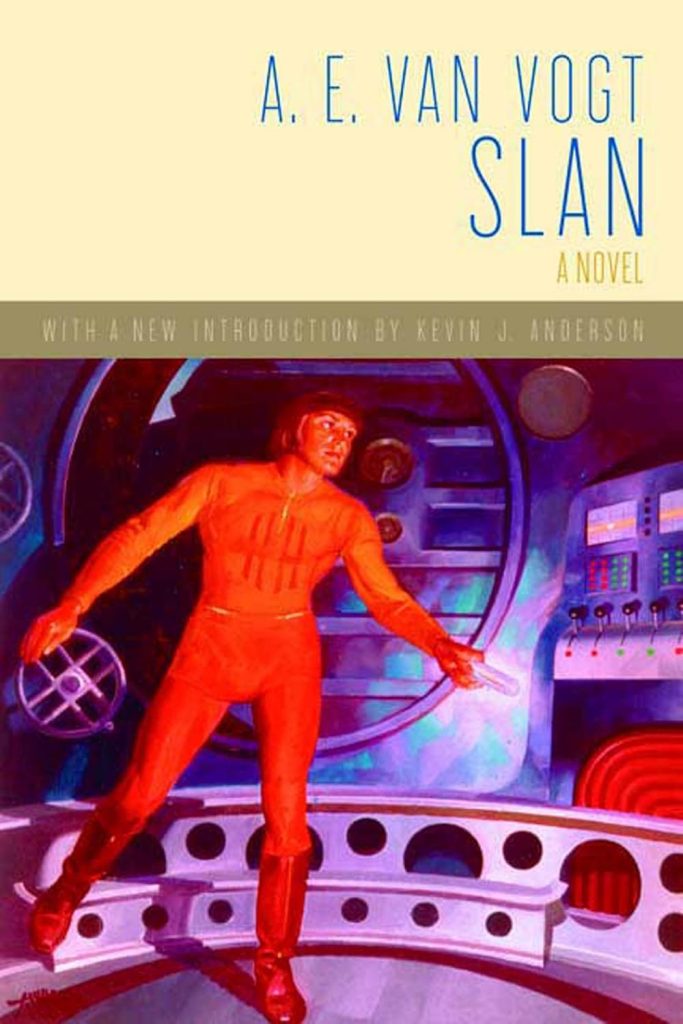
16. Slan — A.E. van Vogt (1946)
Van Vogt’s most celebrated novel and one of the foundational texts of Golden Age science fiction. Jommy Cross is a slan — a mutant human with telepathy and tendrils, hunted by a humanity that fears what he represents. The novel’s famous opening line — “The woman’s hand was warm and alive, then very still” — drops you directly into a world where the protagonist is already in mortal danger.
Van Vogt isn’t the most polished writer on this list. His plots operate by dream logic — things happen because they need to happen, not always because they’ve been set up carefully. But his energy and invention are extraordinary, and Slan shaped the “persecuted superior being” template that runs through decades of subsequent science fiction.
Why it matters: So beloved by early fandom that “fans are slans” became a genuine catchphrase. A foundational text of the superpowered-outcast story.
Edition: Orb Books paperback (where available) or used copies. Paperback on Amazon | Kindle edition
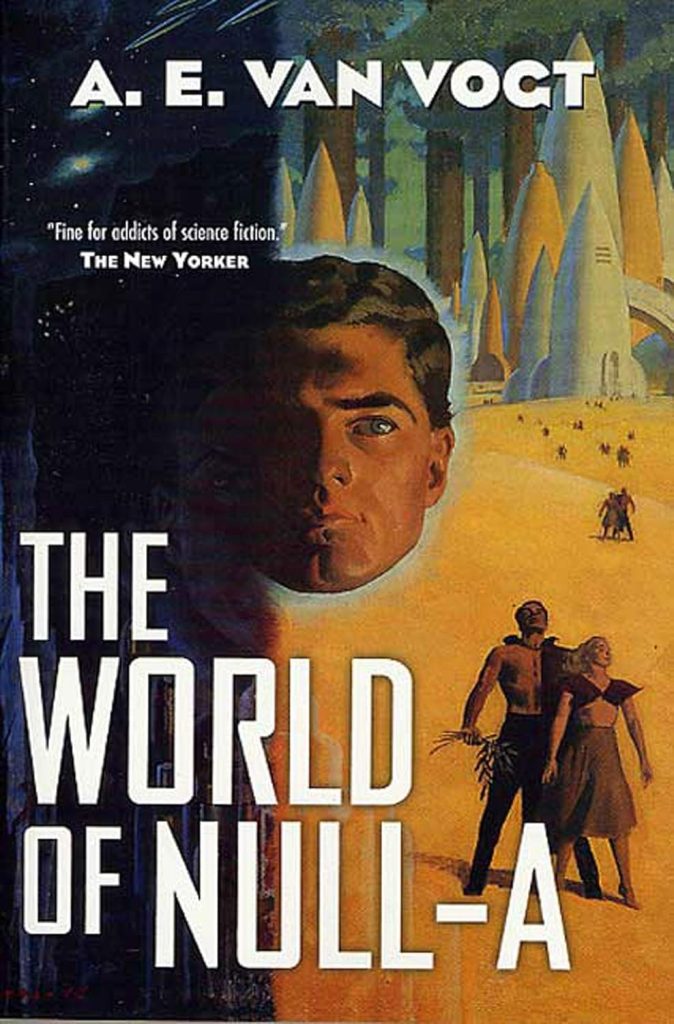
17. The World of Null-A — A.E. van Vogt (1948)
Van Vogt’s other major work and a stranger, more ambitious book than Slan. Gilbert Gosseyn wakes up at the Games Machine in the futuristic city of Venus with no memory of who he is, only to discover that he has multiple bodies, extraordinary mental abilities, and enemies he doesn’t remember making.
The novel is built around Alfred Korzybski’s general semantics philosophy — a real intellectual movement of the 1940s arguing that human suffering stems from confused language and thought. Van Vogt takes these ideas seriously and builds a plot around them that is gloriously, defiantly strange.
Why it matters: Famously dense and strange even by van Vogt’s standards—Damon Knight’s harsh contemporary review remains one of the genre’s most famous critical takedowns, but the novel’s influence on later mind-bending SF is undeniable.
Edition: Orb Books paperback (where available) or used copies. Paperback on Amazon
 |
The Quieter Side of the Era
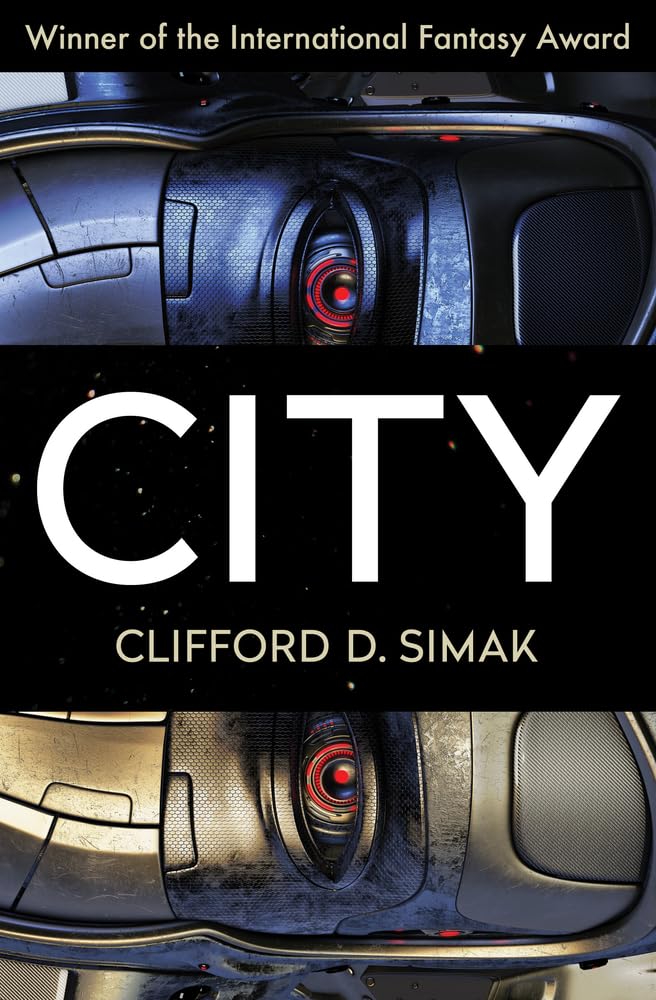
18. City — Clifford D. Simak (1952)
Eight linked stories spanning thousands of years, narrated by dogs who have inherited the Earth after humanity quietly gave up on civilization and dispersed. Simak frames the whole thing as a collection of ancient myths — stories the dogs tell about the legendary “Webster family” and the strange creature called Man.
City is the pastoral counter-argument to every aggressive, expansionist science fiction story of the Golden Age. Simak’s vision of the future is quiet, melancholy, and unexpectedly moving. The dogs are not played for comedy. They are played for genuine pathos, and it works completely.
Why it matters: Won the International Fantasy Award. A gentle, melancholy counterpoint to the era’s more triumphalist space opera—pastoral SF at its best.
Edition: Old Earth Books paperback (where available) or used copies. Paperback on Amazon | Kindle edition
 |
 |
Social Satire and Speculative Politics
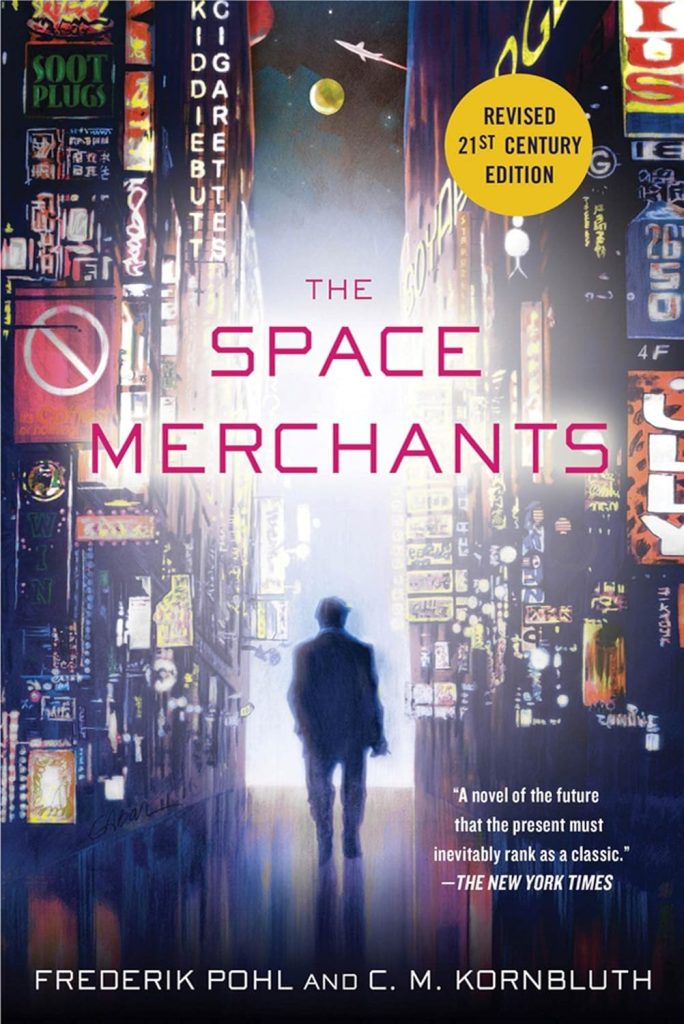
19. The Space Merchants — Frederik Pohl & C.M. Kornbluth (1952)
An advertising executive in a future where corporations have replaced governments is assigned to sell Venus colonization to a skeptical public. Pohl and Kornbluth’s satire of consumer capitalism is so precise and so vicious that it reads less like 1952 and more like a particularly sharp piece of contemporary social criticism.
The world they build — where advertising is the dominant ideology and consumers are managed like livestock — has only become more recognizable in the seventy-plus years since publication. Essential reading and genuinely funny in a way that Golden Age science fiction rarely is.
Why it matters: A razor-sharp satire of consumer capitalism that reads as more prescient with every passing decade.
Edition: Old Earth Books paperback (where available) or used copies. Paperback on Amazon
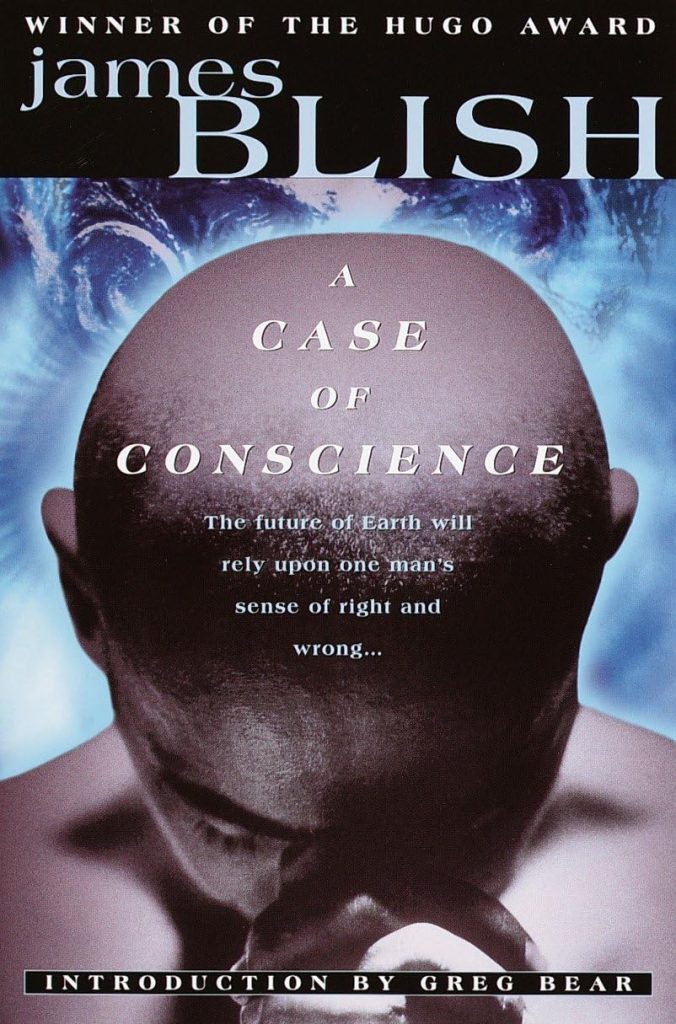
20. A Case of Conscience — James Blish (1958)
A Jesuit biologist on a mission to an alien world discovers a species that has achieved moral perfection without religion — and concludes that such a world could only have been created by the devil as a temptation. Blish is asking genuinely difficult questions about faith, science, and the nature of moral knowledge.
A Case of Conscience won the Hugo in 1959 and remains one of the most intellectually serious novels in Golden Age science fiction. It demands a reader willing to engage with theology as seriously as with science. Worth every bit of that engagement.
Why it matters: Won the Hugo Award. One of the most serious theological arguments ever conducted inside a science fiction novel.
Edition: Del Rey paperback (where available) or used copies. Paperback on Amazon | Kindle edition
 |
Bradbury’s Other Essential
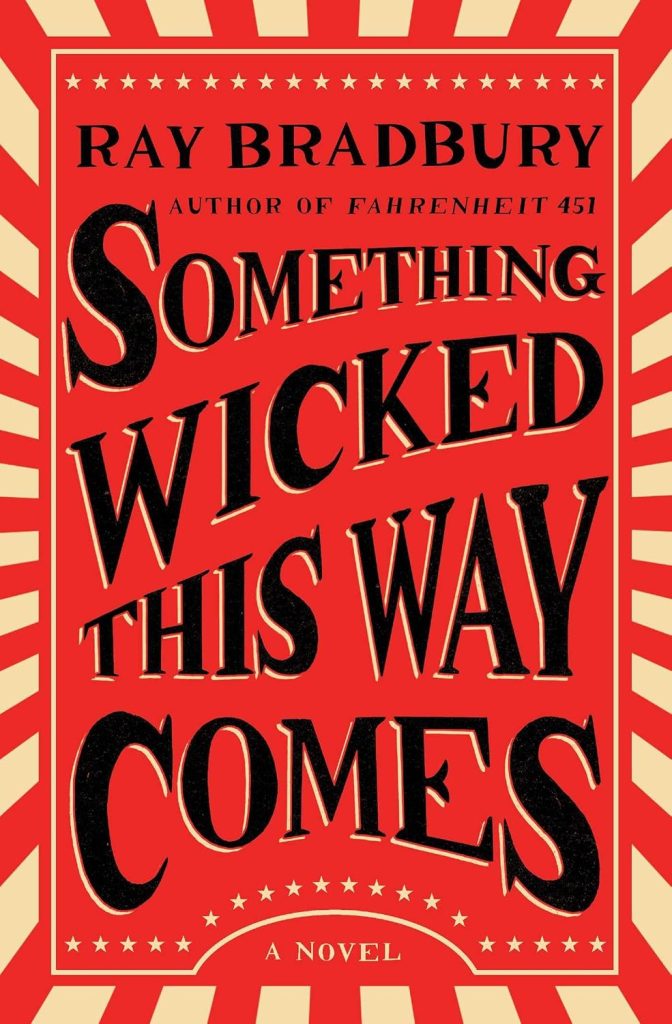
21. Something Wicked This Way Comes — Ray Bradbury (1962)
A fair warning: this is Bradbury’s darkest book and his most explicitly fantastical — closer to dark fantasy than science fiction. But excluding it from a Bradbury discussion would be dishonest, and readers who love his voice in The Martian Chronicles and Fahrenheit 451 need to know it exists.
A carnival arrives in a small Illinois town just after midnight in October. Mr. Dark’s Pandemonium Shadow Show offers its visitors exactly what they want most. The price is everything.
Bradbury writing about childhood, fear, and the particular temptation of becoming someone other than who you are. Stunning prose. Not science fiction. Essential anyway.
Why it matters: Bradbury at his most atmospheric—part coming-of-age story, part American gothic horror, written in some of his most controlled, lyrical prose.
Edition: Simon & Schuster paperback. Paperback on Amazon | Kindle edition
 |
Bridging Into the New Wave
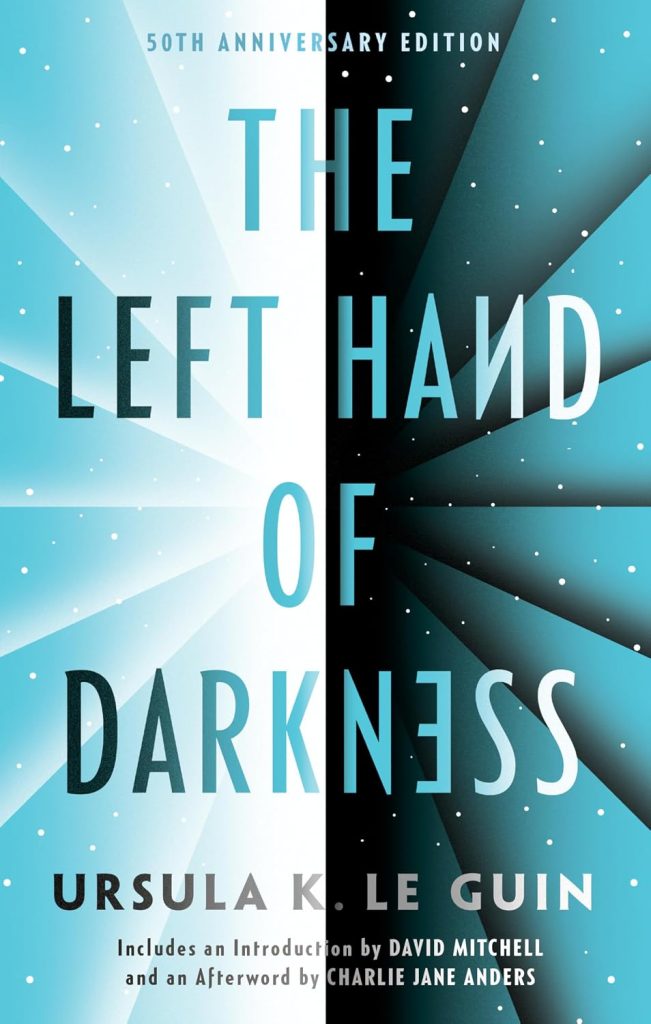
22. The Left Hand of Darkness — Ursula K. Le Guin (1969)
Le Guin is the bridge between the Golden Age and the New Wave — too literary and anthropologically serious for the pulp era, too deeply invested in ideas for the purely experimental fiction that followed. The Left Hand of Darkness is her masterwork and one of the genuinely great American novels of the twentieth century regardless of genre.
A human envoy arrives on the planet Gethen, whose inhabitants have no fixed biological sex — they are sexually neutral except during brief periods of fertility. Le Guin uses this premise to ask what gender actually is, what it does to how we see each other, and what remains when it’s removed. The friendship that develops between the envoy Genly Ai and the Gethenian politician Estraven is one of the most carefully observed relationships in science fiction.
If you’re going to read one book from this entire list that will change how you think, it’s this one.
Why it matters: Won both the Hugo and Nebula. Often cited as the moment science fiction became unmistakably literary—where Golden Age speculation evolved into the New Wave’s deeper interest in anthropology, gender, and interiority.
Edition: Ace paperback. Paperback on Amazon | Kindle edition
 |
The Grandfather Text
Read everything above first. Then come back for these.
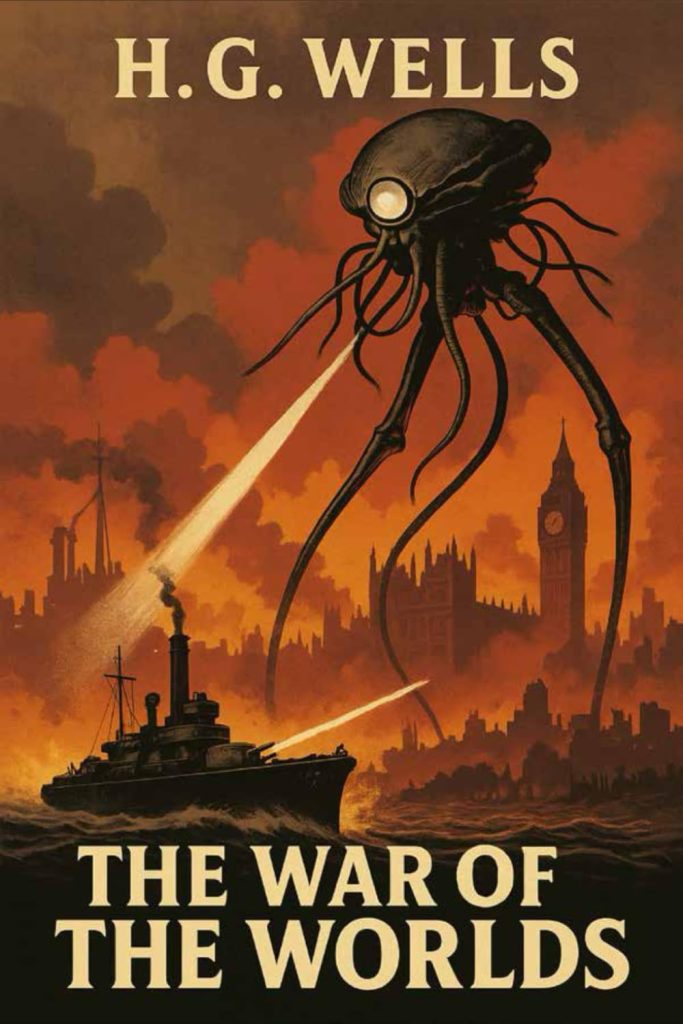
23. The War of the Worlds — H.G. Wells (1898)
Technically pre-Golden Age by forty years, but Wells is the grandfather of the entire genre and omitting him would be like teaching jazz history without mentioning New Orleans. The Martian invasion of Surrey is the template for every alien invasion story that followed — and Wells’ original is still the best. The heat-ray, the tripods, the red weed choking the Thames, the narrator’s desperate journey through a collapsed civilization. All of it arrived here first.
Read the original. The Orson Welles radio adaptation and the various film versions are interesting as cultural artifacts, but none of them capture what Wells actually wrote.
Why it matters: Predates the Golden Age by forty years but invented the template nearly every alien-invasion story since has worked from. No list of foundational science fiction is honest without it.
Edition: Penguin Classics or any public domain edition. Paperback on Amazon | Kindle edition
 |
More Asimov
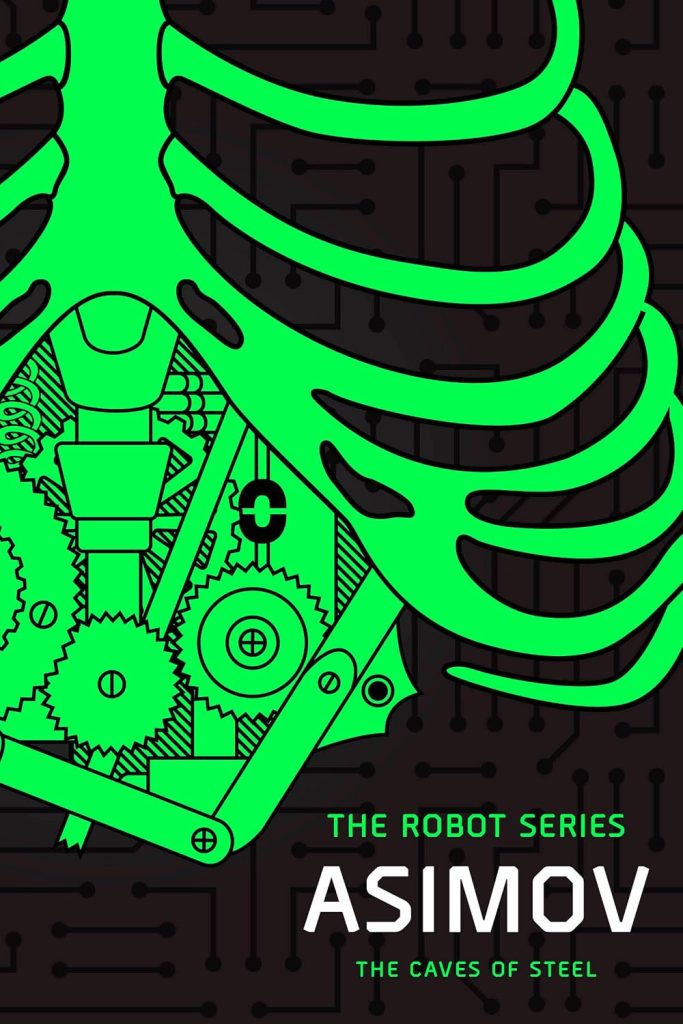
24. The Caves of Steel — Isaac Asimov (1954)
Asimov’s third entry on this list and the beginning of his Robot detective series — which he eventually connected to the Foundation universe in one of science fiction’s most ambitious acts of retroactive world-building. Detective Elijah Baley and his robot partner R. Daneel Olivaw investigate a murder in a future New York where eight billion humans live in enclosed city-arcologies and robots are both essential and despised.
The Caves of Steel works as genuine detective fiction as well as science fiction — a rare achievement. If Foundation is Asimov the idea machine and I, Robot is Asimov the logician, The Caves of Steel is Asimov the storyteller. Start here if you want to understand his full range.
Why it matters: Proved science fiction could sustain a genuinely satisfying mystery plot while exploring serious ideas about automation and human prejudice.
Edition: Spectra paperback. Paperback on Amazon | Kindle edition
 |
Wyndham’s Other Major Work
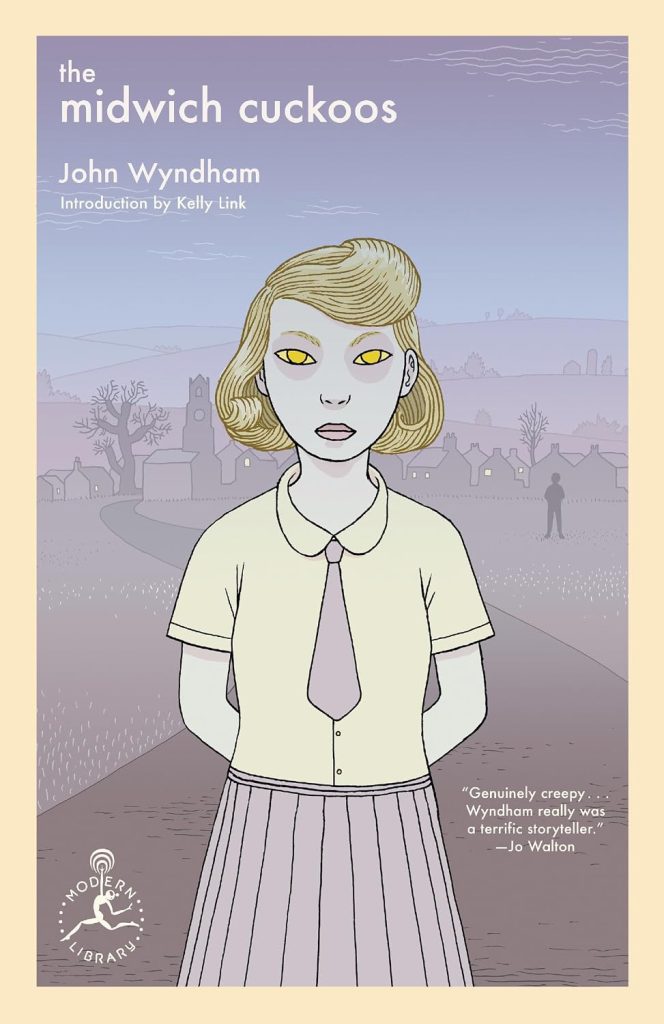
25. The Midwich Cuckoos — John Wyndham (1957)
Wyndham’s second entry and his most unsettling book. Every woman of childbearing age in the English village of Midwich becomes pregnant simultaneously following a mysterious blackout. The children born nine months later are golden-eyed, telepathically linked, and disturbingly cold. They age faster than normal children. They learn faster. They are not entirely human.
Wyndham is asking the same question as Childhood’s End — what happens when the next stage of evolution arrives? — but his answer is far darker and more ambivalent. The village-England setting makes the strangeness more acute, not less. The film adaptations (Village of the Damned) are worth watching after you’ve read the book.
Why it matters: Filmed twice as Village of the Damned. A quietly unnerving exploration of what happens when a community is forced to raise something that may not be entirely human—or entirely on humanity’s side.
Edition: Modern Library paperback. Paperback on Amazon | Kindle edition
Building Your Golden Age Shelf
Twenty-five books is a lot to take in at once. If you’re starting from zero, here’s a realistic on-ramp:
Read these five first:
- Foundation (Asimov)
- The Martian Chronicles (Bradbury)
- Childhood’s End (Clarke)
- The Stars My Destination (Bester)
- Flowers for Algernon (Keyes)
That gives you the genre’s emotional range in five books: galactic-scale ambition, melancholy poetry, cosmic awe, kinetic revenge, and devastating intimacy. Everything else on this list builds outward from there.
Related Resources
- How to Start Collecting Vintage Sci-Fi Paperbacks — Build your collecting skills before you go hunting.
- Where to Buy Vintage Sci-Fi Books Online — Find these titles in their original vintage editions.
- Philip K. Dick: 10 Best Novels Ranked — A deep dive into the writer who pushed beyond the Golden Age.
- Beginner’s Guide to Collecting Sci-Fi Pulps & Magazines — Read these stories in their original magazine form.