Most reading lists hand you fifty books and wish you luck.
This one is different. Twelve books, one per month, arranged in a deliberate order that builds on itself. By December you won’t just have read twelve great science fiction novels… you’ll understand the genre. Its history, its range, its obsessions, and why readers have been coming back to it for a century.
The books cover the full span of vintage science fiction’s golden era: early 1950s through the mid-1970s, American hard SF through British New Wave, intimate character studies through galaxy-spanning civilizations.
No two consecutive months read the same way.
The difficulty curve is intentional … the first four months are accessible and immediately rewarding, the middle months push harder, and the final three build toward an ending that earns everything that came before it.
One book a month is achievable. Most of these run 200 to 300 pages. Some are shorter. You could read the whole list in a weekend if you wanted to, but spending a month with each one, letting it settle, paying attention to how it sits in your memory, is a richer and more lasting experience.
Want a printable version of this plan? Join the newsletter and get the free PDF checklist … all 12 books with reading notes that include what you’ll learn. Join the Vintage Sci-Fi Dispatch →
How This List Was Built
A few editorial decisions worth knowing about before you start.
The difficulty curve is deliberate.
Months 1 through 4 are accessible and immediately rewarding.
Months 5 and 6 are engaging but more demanding.
Months 7 through 9 ask more of you.
Months 10 through 12 are as literary as this genre gets.
That progression is the point… by the time you reach the hard books, you’ll have the context to appreciate them fully.
No Heinlein. Deliberate. Starship Troopers and Stranger in a Strange Land are both politically divisive in ways that can derail a reader’s first year… not because they’re bad books, but because they tend to generate arguments rather than reading. Heinlein belongs in his own author deep-dive, not a starter library. He’ll get one.
Two Philip K. Dick entries. Also deliberate. Dick is the most essential figure in this half of the genre’s history, and placing him at Month 7 and Month 12 creates something intentional… you meet him mid-journey, then return to him at the end with a full year of context behind you. The second time lands completely differently. That’s the idea.
Affiliate Disclosure: This post contains affiliate links. As an Amazon Associate I earn from qualifying purchases. If you buy through these links, I may earn a commission at no additional cost to you.
Month 1: January
The Martian Chronicles — Ray Bradbury (1950)
Where to begin. Every time.
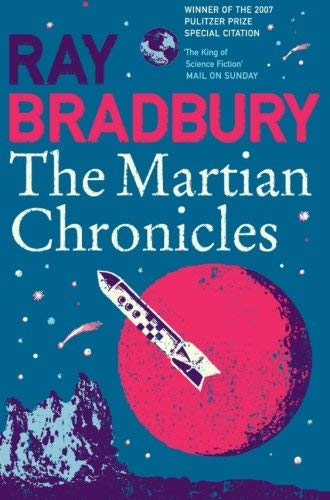
A series of linked stories following humanity’s colonization of Mars… and the quiet, melancholy displacement of the Martians who were there first. Bradbury isn’t interested in rockets or orbital mechanics. He’s interested in longing, nostalgia, and the human capacity to carry our worst impulses to new worlds. The prose is unlike anything else in the genre: lyrical, precise, built from images rather than exposition.
What you’ll learn this month: That science fiction can be beautiful. Not clever-beautiful or concept-beautiful… sentence-by-sentence beautiful. Bradbury sets the emotional register for the whole year: this is a genre that cares about what it means to be human, not just what might be scientifically possible.
Get it: Amazon paperback | Kindle edition
Looking ahead: Next month you move from Bradbury’s intimacy to Asimov’s scale… from one man standing on a Martian plain to the fall of a civilization. The contrast is part of the education.
Month 2: February
Foundation — Isaac Asimov (1951)
The other mode of science fiction.
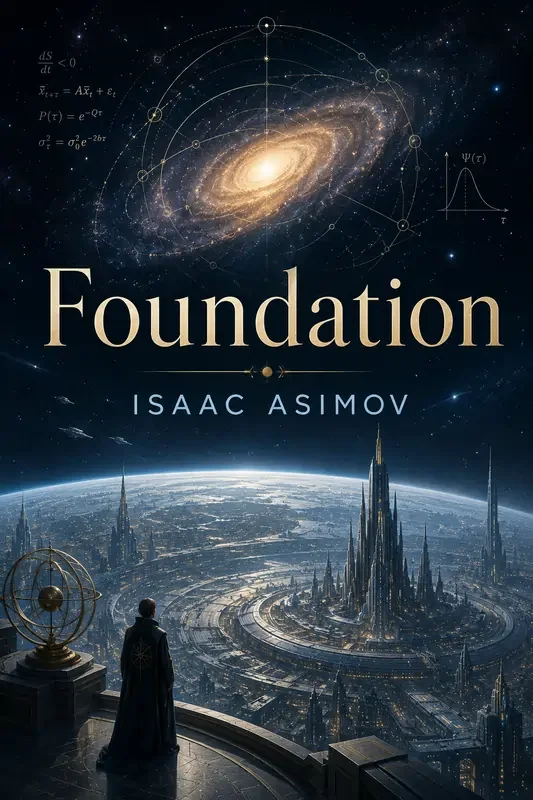
A mathematician named Hari Seldon predicts the fall of the Galactic Empire using psychohistory, a statistical science of mass human behavior, and establishes a Foundation to shorten the dark age that follows. The novel spans centuries, rotating through different characters at each crisis point. No single hero carries the story. The hero is the plan itself.
What you’ll learn this month: The genre’s capacity for civilizational scale. Where Bradbury worked in images and emotion, Asimov works in ideas and structure. Foundation asks whether history can be engineered, whether a sophisticated enough understanding of human behavior allows someone to shape the future. It’s a question the genre has been asking in various forms ever since.
Get it: Amazon paperback | Kindle edition
Looking ahead: Month three accelerates sharply. If Foundation showed you science fiction’s philosophical ambition, The Stars My Destination shows you its kinetic energy. Prepare for something faster and considerably angrier.
Month 3: March
The Stars My Destination — Alfred Bester (1956)
The moment science fiction proved it could do anything.
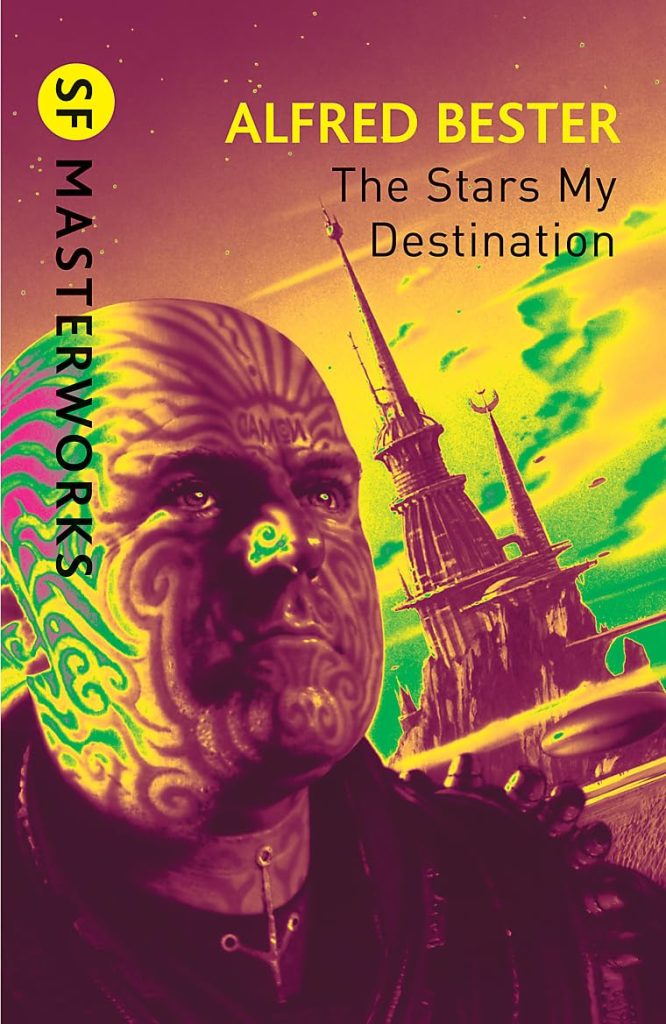
Gully Foyle is the sole survivor of a wrecked spaceship, kept alive by nothing but rage. A passing vessel sees his distress signals and ignores him. What follows is one of the most driven revenge narratives in any genre… Gully’s transformation from near-animal to something stranger and more dangerous, across a future where teleportation has restructured every social hierarchy. Bester writes at a speed most novelists can’t sustain for ten pages. He sustains it for two hundred.
What you’ll learn this month: Science fiction has its own version of Dumas and Dickens… writers who understood that pure narrative momentum is an art form. The Stars My Destination is the genre at its most visceral and propulsive. It’s also formally inventive in ways that still feel contemporary: there’s a sequence near the end where Bester renders synaesthetic experience on the page that no one has quite pulled off the same way since.
Get it: Amazon paperback | Kindle edition
Looking ahead: Month four drops the pace deliberately. After Bester’s velocity, Sturgeon asks you to sit still and feel something.
Month 4: April
More Than Human — Theodore Sturgeon (1953)
What the genre looks like when it leads with compassion.
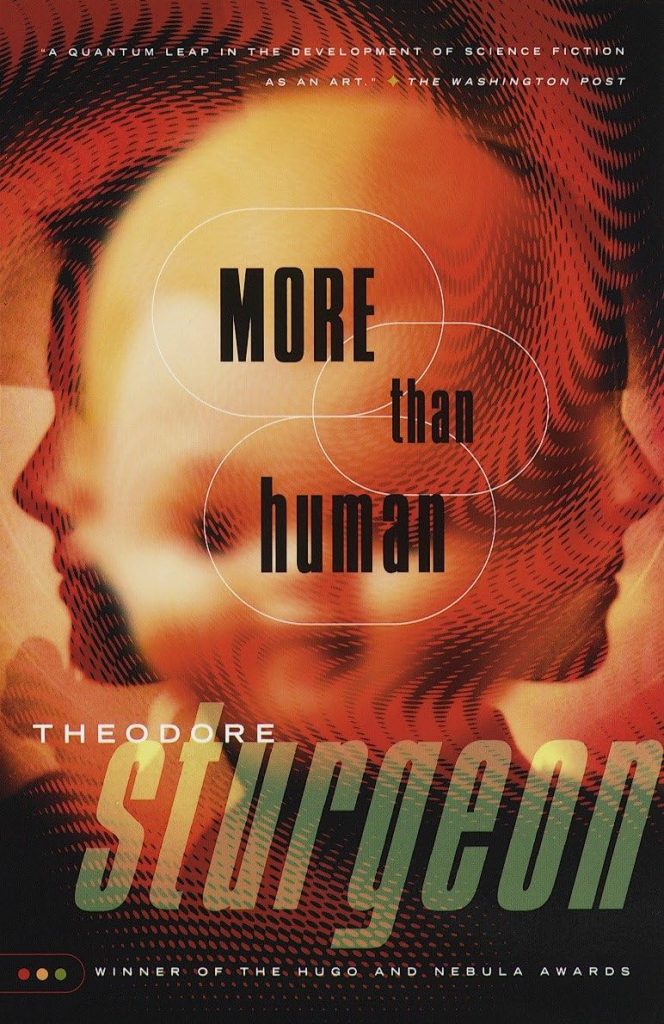
Six outcasts, each damaged, each strange, each alone, discover they can merge into a single composite being, a new evolutionary step beyond individual humanity. The idiot who can hear thoughts. The twins who teleport without knowing it. The baby who knows everything. Lone, who holds them together. Sturgeon is interested in what happens to the people the world doesn’t know what to do with… and whether “more than human” might mean something other than superior.
What you’ll learn this month: The genre’s emotional range. Sturgeon was the writer Heinlein and Asimov admired most, and reading him you understand why… he was doing something neither of them could quite do, which was write about vulnerability and connection without softening or falsifying them. More Than Human is short, read it in two sittings, but the questions it asks about belonging, identity, and what we owe each other don’t leave you when you close the cover. It stays.
Get it: Amazon paperback | Kindle edition
Looking ahead: Month five is the first genuinely challenging book on the list. The Left Hand of Darkness asks more of you than anything so far… and gives more back.
Month 5: May
The Left Hand of Darkness — Ursula K. Le Guin (1969)
The novel that changed what science fiction was allowed to be about.
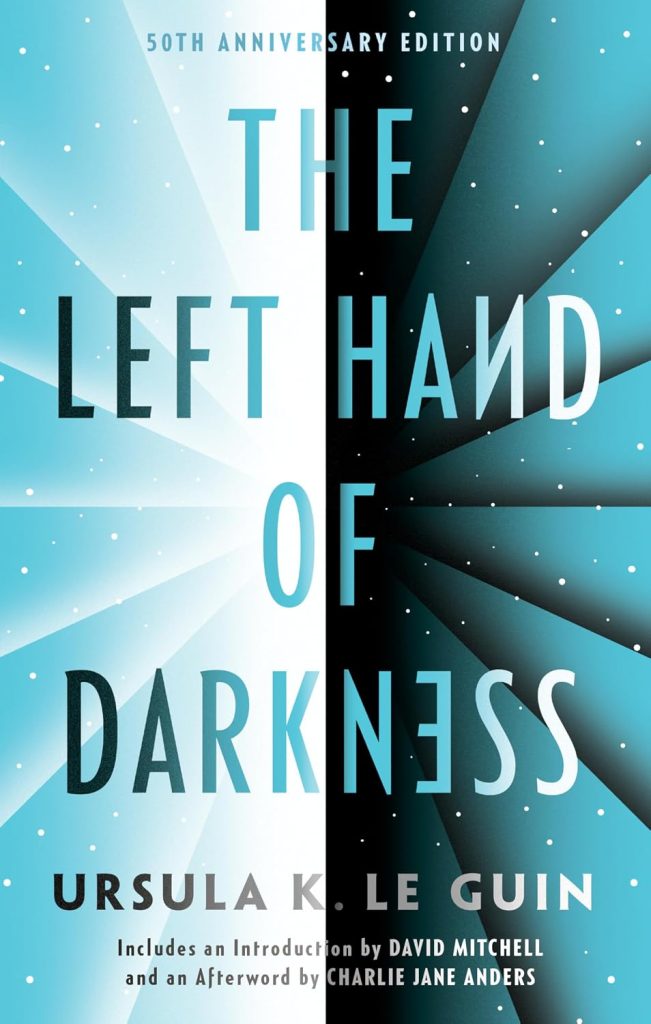
An envoy from a galactic confederation arrives on Gethen (Winter), a planet of perpetual cold whose inhabitants are ambisexual: neither male nor female except during a brief monthly cycle. Genly Ai can’t stop reading them through a gender binary that doesn’t exist here, and his failure of imagination nearly destroys him. What saves him is a friendship, slow, difficult, hard-won, with a disgraced Gethenian politician named Estraven.
What you’ll learn this month: That the genre’s toolkit, world-building, speculative biology, alien culture, can be turned toward questions of embodiment, identity, and love as rigorously as toward questions of space travel or machine intelligence. Le Guin was trained as an anthropologist, and it shows. The novel is a thought experiment conducted with scholarly precision and a novelist’s feeling for character.
Get it: Amazon paperback | Kindle edition
Looking ahead: Month six is your reward for the more demanding work of month five. Lord of Light is pure pleasure… myth and style and momentum.
Month 6: June
Lord of Light — Roger Zelazny (1967)
Myth, technology, and the most stylish prose in the genre.
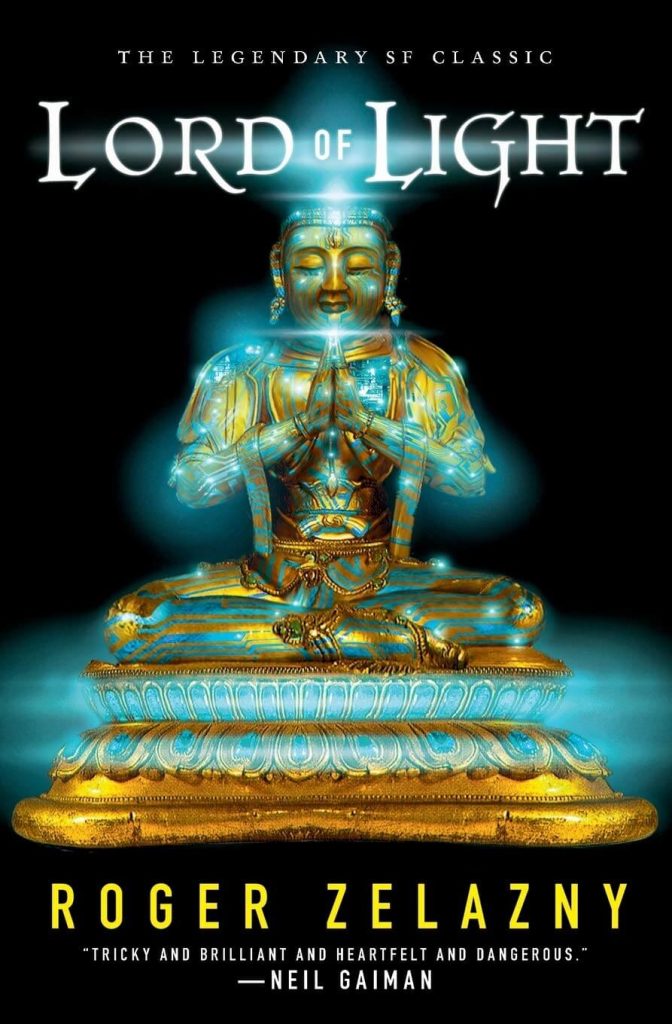
On a colonized planet, the crew of the original ship have made themselves gods… adopting the identities of the Hindu pantheon and using advanced technology to enforce divine authority over successive generations of colonists. Sam, who was once Mahasamatman, has decided this arrangement should end. What follows involves karma, reincarnation, demons, Nirvana, and an extremely committed group of revolutionaries.
What you’ll learn this month: That science fiction can carry the weight of myth without becoming ponderous. Zelazny writes with a compression unlike anyone else… entire battles dispatched in a paragraph, character established in a sentence. The novel opens in the middle of the story and works outward in both directions. By the second chapter you’ve adjusted to the wavelength, and after that the book is simply exhilarating.
Get it: Amazon paperback | Kindle edition
Looking ahead: Month seven introduces Philip K. Dick. You’ve been building toward him all year. He’ll feel different now than he would have in January.
Halfway There — Get the Free Checklist
Six months in, six to go.
If you want a printable version of this plan with all 12 books with reading notes…
…it’s free when you join the Vintage Sci-Fi Dispatch newsletter…
Join the newsletter and get your free Starter Library guide →
Month 7: July
Do Androids Dream of Electric Sheep? — Philip K. Dick (1968)
The empathy question. Still unanswered.
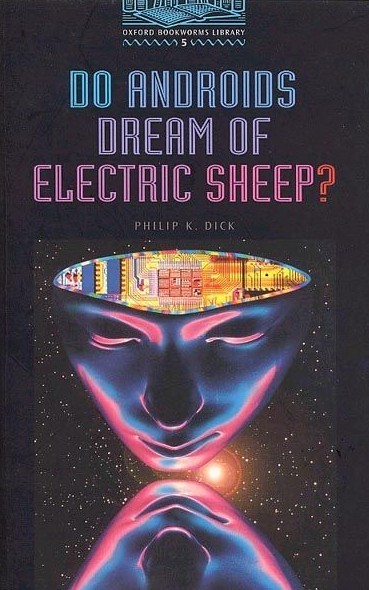
Rick Deckard hunts androids in a post-nuclear San Francisco… “retires” them, in the official language. The Nexus-6 models are nearly indistinguishable from humans. The test that identifies them measures empathic response. Deckard isn’t entirely sure it would identify him. Meanwhile, a man named John Isidore, classified as “chickenhead” by the state, too damaged by radiation to pass intelligence tests, shelters three androids in his building and treats them with more genuine care than any of the humans around him.
What you’ll learn this month: The novel Blade Runner adapted but couldn’t quite contain. The film stripped away Mercerism, the empathy religion that connects all surviving humans through a shared hallucination, and with it Dick’s central question: if empathy can be simulated, does that simulation have moral weight? After six months of reading, you’re ready to sit with that question without needing it resolved.
Get it: Amazon paperback | Kindle edition
Looking ahead: Month eight is the hardest book on this list. Stand on Zanzibar demands patience and active reading. It’s worth every page.
Month 8: August
Stand on Zanzibar — John Brunner (1968)
The most formally ambitious novel on this list.

In 2010, the world has 7 billion people and is approaching collapse. Norman Niblock House and Donald Hogan are roommates in a New York City apartment building who find themselves drawn into separate global crises… a corporate intervention in an African nation, a genetic breakthrough that may or may not save humanity. The story is told in fragments: narrative chapters alternating with news broadcasts, advertisements, stream-of-consciousness passages, and excerpts from a fictional sociologist’s books.
What you’ll learn this month: Brunner borrowed his structure from John Dos Passos’s U.S.A. trilogy and applied it to science fiction’s biggest subject… the future of human civilization under systemic pressure. The fragmented form isn’t difficult for its own sake: it enacts the experience of living inside an information-saturated society that processes faster than any individual can follow. This is the novel on the list most likely to make you stop and think about how you’re reading, not just what you’re reading.
Get it: Amazon paperback | Kindle edition
Looking ahead: Month nine breathes after Brunner. A Canticle for Leibowitz is long but unhurried… a chance to slow down and think.
Month 9: September
A Canticle for Leibowitz — Walter M. Miller Jr. (1959)
The long view. Centuries of it.
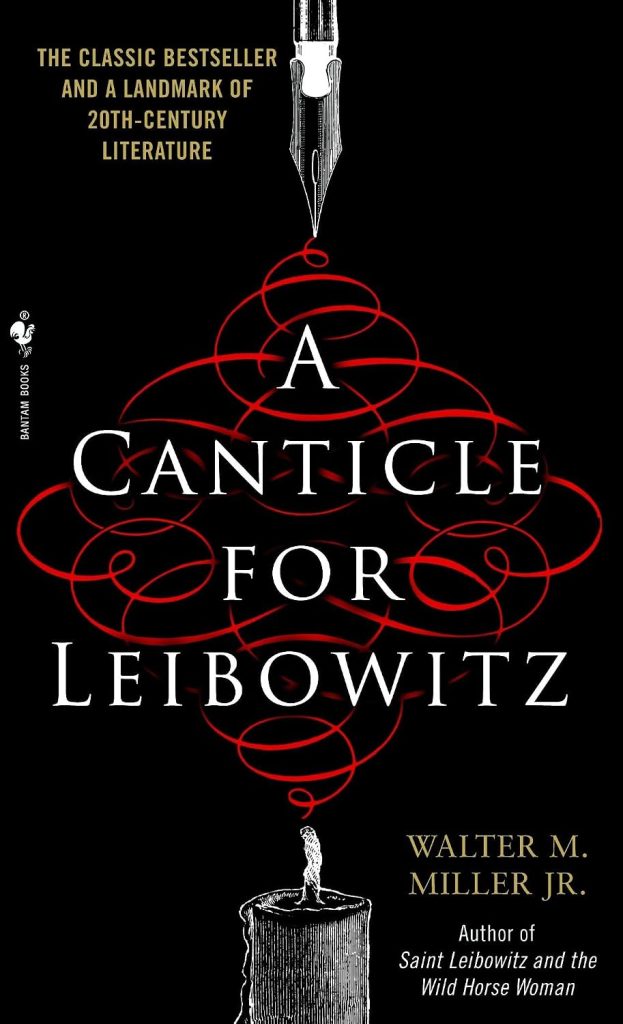
Centuries after a nuclear war, monks in a desert abbey preserve fragments of pre-war scientific knowledge, circuit diagrams, shopping lists, technical manuals, without understanding what they contain. The novel spans three complete cycles of civilization, the dark age, the new renaissance, the second technological era, and asks whether human beings are capable of learning from history, or whether the capacity for self-destruction is simply part of what we are.
What you’ll learn this month: The genre’s relationship with time. Bradbury worked in myth-time, Asimov in historical time, Dick in psychological time. Miller works in geological time… the scale of civilizations rising and falling. After Brunner’s information overload, this novel’s patience feels like relief. The abbey sequences in the first section are some of the most quietly beautiful writing on this list.
Get it: Amazon paperback | Kindle edition
Looking ahead: Month ten is the most interior book on this list. Dying Inside is the genre at its most novelistic… close third person, a character study that uses telepathy the way literary fiction uses memory.
Month 10: October
Dying Inside — Robert Silverberg (1972)
How far inward science fiction can go.
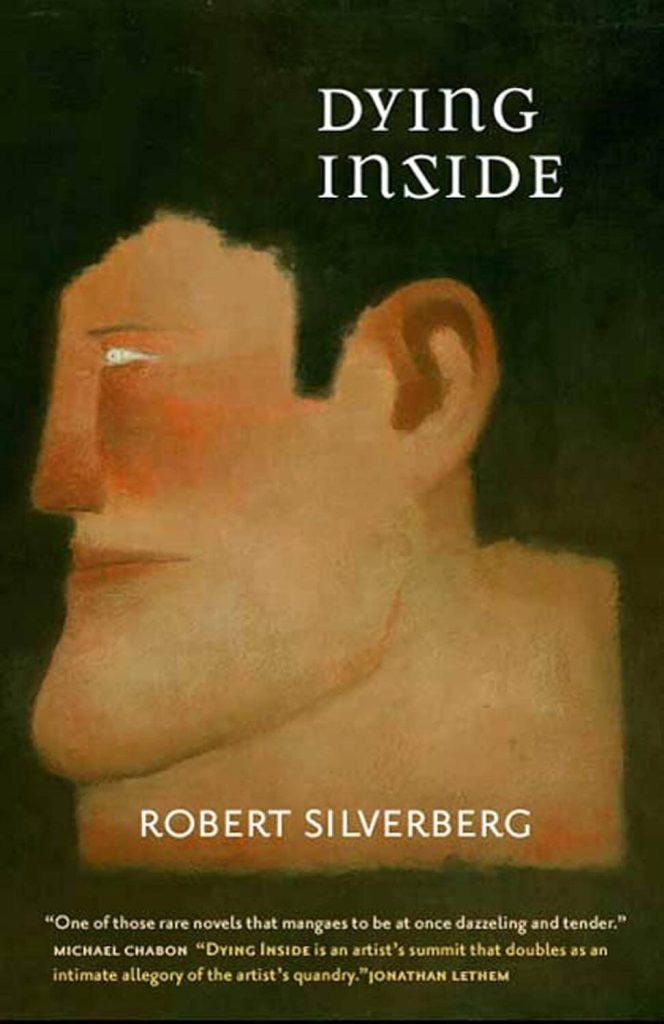
David Selig has been a telepath his whole life… able to hear the thoughts of everyone around him, unable to stop. Now in his late thirties, the ability is fading. And he’s discovering that losing a power he has always hated, always used to keep people at arm’s length, may be the most devastating thing that has ever happened to him. The novel is a character study of a man who has used a gift as a wall, told in prose that moves between first, second, and third person as Selig’s sense of self fragments.
What you’ll learn this month: The genre doesn’t have to reach outward to be science fiction. The speculative element here, telepathy, is used the way a literary novelist uses a formative trauma or a physical disability: as the thing that shaped a life, that explains a person, that must finally be confronted. By October you’ve earned the patience this book requires. It will be the one you’re most likely to recommend to a reader who thinks they don’t like science fiction.
Get it: Amazon paperback | Kindle edition
Looking ahead: Month eleven takes you somewhere stranger than anywhere else on this list. The Drowned World doesn’t work the way novels usually work… let it.
Month 11: November
The Drowned World — J.G. Ballard (1962)
The unconscious as landscape.
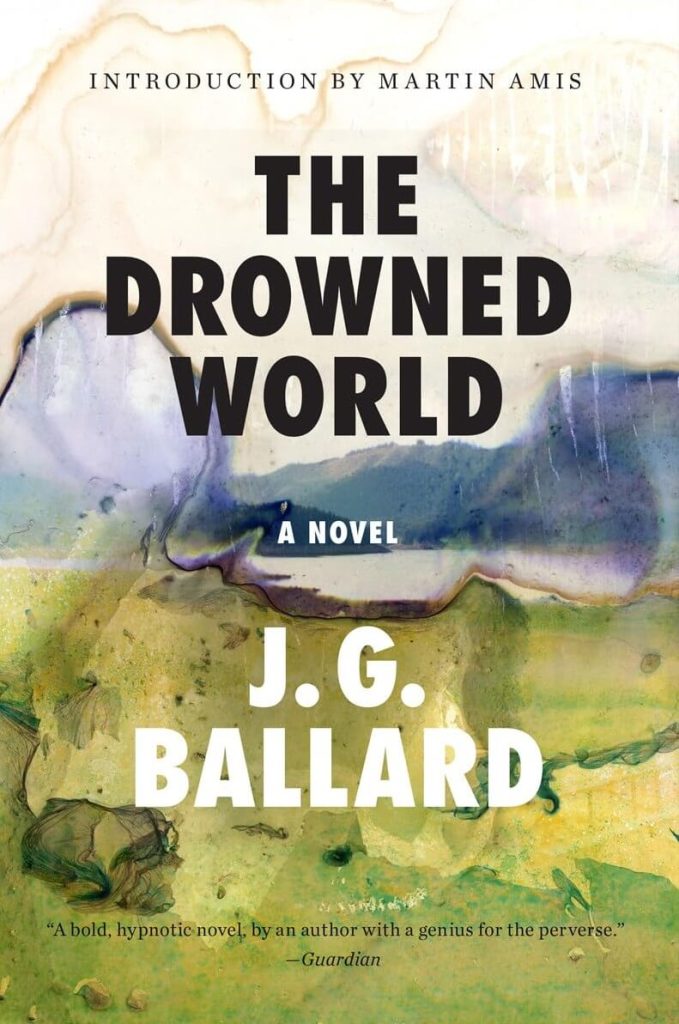
Solar radiation has melted the ice caps. The northern cities are flooded. Dr. Robert Kerans is stationed on a research vessel on the lagoon that was once London… cataloging the biological changes as equatorial flora and fauna advance northward, the city settling into the silt beneath him. He should evacuate south with the others. He can’t make himself go. The drowned city is pulling him deeper, and the heat is producing in him something that feels like racial memory… like regression, like homecoming.
What you’ll learn this month: That a science fiction novel can work by dream logic and still be entirely serious. Ballard came out of surrealism and psychoanalysis as much as science fiction, and The Drowned World is structured around the unconscious… not as metaphor but as actual narrative architecture. Think of Kerans’s psychological pull toward the flooded city the way you’d think of a recurring dream that feels more real than waking life. Ballard is building his plot the same way. After ten months of books that rewarded active, rational reading, this one asks something different of you. Go with it.
Get it: Amazon paperback | Kindle edition
Looking ahead: Month twelve is the arrival. You’ve read eleven books. You’re ready for Ubik in a way no one is ready for it at the start.
Month 12: December
Ubik — Philip K. Dick (1969)
The masterpiece. The one that reframes everything.
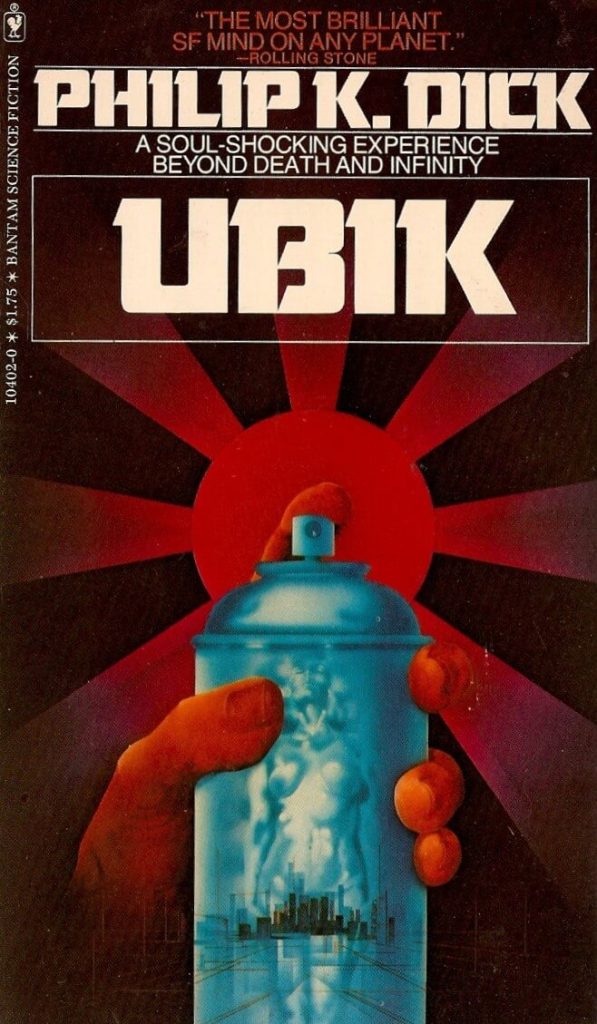
Joe Chip works for a company that employs anti-psychics… people whose presence neutralizes the abilities of telepaths and precogs. After a mission to the Moon goes wrong, members of his team begin dying in bizarre ways. Reality itself starts degrading: cigarettes crumble, coffee sours instantly, appliances revert to older models. Advertisements for a product called Ubik appear everywhere, promising to halt the decay. The chapter epigraphs are advertisements for Ubik, sardonic, shifting, increasingly strange, that tell their own parallel story.
What you’ll learn this month: Everything. Ubik is the year’s final exam. You’ll find Bradbury’s imagery in the degrading objects. Asimov’s structural logic in the way the mystery is constructed. Le Guin’s anthropological patience in Dick’s attention to how his characters actually live. Brunner’s formal invention in the epigraphs. Ballard’s dream logic in the final revelation. Dick is the writer who synthesized the whole era, Golden Age ambition, New Wave strangeness, literary interiority, and Ubik is where that synthesis is most complete. Re-read it after a year away. It will be a different book.
Get it: Amazon paperback | Kindle edition
Affiliate Disclosure: This post contains affiliate links. As an Amazon Associate I earn from qualifying purchases. If you buy through these links, I may earn a commission at no additional cost to you.
The Full List at a Glance
- January: The Martian Chronicles — Ray Bradbury (1950)
- February: Foundation — Isaac Asimov (1951)
- March: The Stars My Destination — Alfred Bester (1956)
- April: More Than Human — Theodore Sturgeon (1953)
- May: The Left Hand of Darkness — Ursula K. Le Guin (1969)
- June: Lord of Light — Roger Zelazny (1967)
- July: Do Androids Dream of Electric Sheep? — Philip K. Dick (1968)
- August: Stand on Zanzibar — John Brunner (1968)
- September: A Canticle for Leibowitz — Walter M. Miller Jr. (1959)
- October: Dying Inside — Robert Silverberg (1972)
- November: The Drowned World — J.G. Ballard (1962)
- December: Ubik — Philip K. Dick (1969)
If You Want to Collect These as You Go
Every book on this list has affordable vintage paperback editions available… most under $20 in readable condition, some under $10. Hunting down the original editions as you read through the year adds another layer to the experience: you’re not just reading the books, you’re holding the same physical objects readers held in 1969 or 1956.
A few practical notes:
- The Martian Chronicles (Bantam, 1950s–60s) and Foundation (Gnome Press/Avon, 1950s) are the hardest to find in collectible condition… but worth the hunt
- The Stars My Destination (Signet, 1957) and More Than Human (Ballantine, 1950s) are affordable and relatively easy to find in Good condition… expect to pay $10 to $25
- Do Androids Dream of Electric Sheep? (Signet, 1969) and Ubik (Bantam, 1970) are the PKD collector targets on this list… $30 to $80 each in Good condition
- Stand on Zanzibar and The Drowned World in their original editions are underpriced for what they are… both available under $35 if you’re patient on eBay
For full guidance on finding, evaluating, and storing vintage paperbacks, start with our guide to starting a vintage sci-fi paperback collection.
What Comes After Month 12
By December you’ll have a clear sense of what you love and what you want more of. A few natural directions:
More PKD: You’ve read two of his best. Our Philip K. Dick: 10 Best Novels guide ranks the other eight worth reading and tells you what order to read them in.
More Golden Age: Our Golden Age Science Fiction Essentials covers 25 foundational novels including the authors you haven’t met yet — Heinlein, Clarke, van Vogt, Simak.
More New Wave: Our New Wave Sci-Fi: 15 Weird & Brilliant Novels goes deeper on Ballard, Moorcock, Delany, and the British movement.
Start collecting: You’ve been reading these in modern reprints all year. Now go find the originals. Our guide to buying vintage sci-fi online covers every major platform.
Get the Free PDF Guide
Want this plan as a printable PDF with reading notes, edition recommendations, and a tracker for each book? It’s free when you join the Vintage Sci-Fi Dispatch newsletter.
Join the newsletter and get your free Starter Library guide →