Something happened to science fiction around 1962…
The rockets were still there, but the writers stopped caring quite so much about where they were going. They started caring instead about what it felt like to be inside a human mind at the moment everything changed…
…about inner space rather than outer space, about language and consciousness and the slow collapse of certainties that the Cold War, Vietnam, psychedelics, and the sexual revolution were producing in real time.
The New Wave wasn’t a manifesto or a club.
It was a mood, spread across two continents… the British writers clustered around Michael Moorcock’s New Worlds magazine in London, the Americans pushing against genre conventions in the pages of Dangerous Visions and Galaxy.
What they shared was impatience with the clean optimism of the Golden Age and a conviction that science fiction could carry the same literary weight as any other fiction.
The novels on this list are the best of what that movement produced: formally ambitious, emotionally demanding, often strange in ways that still feel strange today. Some of them are easy to find. Some are harder. All of them are worth the effort.
New to collecting vintage paperbacks? Our beginner’s collecting guide covers everything you need before you start hunting these down.
The Undeniable Anchors
These five appear on every serious New Wave reading list because they have to. They are the movement’s most achieved works… the novels that proved science fiction could do what its critics said it couldn’t.
1. The Left Hand of Darkness — Ursula K. Le Guin (1969)
The novel that changed what science fiction was allowed to be about.
An envoy from a galactic confederation arrives on Gethen, a planet of perpetual winter whose inhabitants are ambisexual… neither male nor female except during a brief monthly cycle. Genly AI cannot stop seeing them through the lens of a gender binary that doesn’t exist here, and his failure of imagination nearly destroys him.
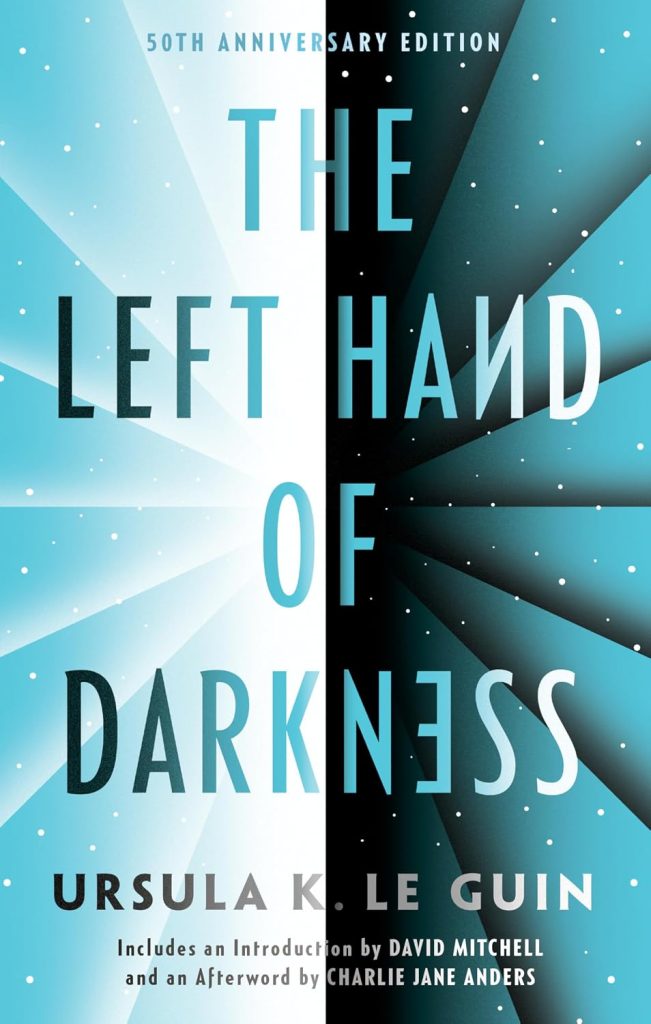
Why it belongs here: Won both the Hugo and Nebula Awards. Le Guin didn’t use science fiction to speculate about technology… she used it to conduct a thought experiment about the deepest assumptions human beings carry. The result is one of the most genuinely strange and genuinely moving novels the genre has produced.
Edition: Ace paperback. Paperback on Amazon | Kindle edition
Collector note: Original 1969 Ace paperback (first edition) is collectible and still affordable at $20-50 in Good condition.
2. Ubik — Philip K. Dick (1969)
Reality as a product with a failing warranty.
Joe Chip’s team of anti-psychics dies on a mission to the Moon, and then reality itself begins degrading around the survivors… cigarettes crumble, coffee goes sour instantly, appliances revert to earlier models. Advertisements for a product called Ubik appear everywhere, promising to halt the decay.
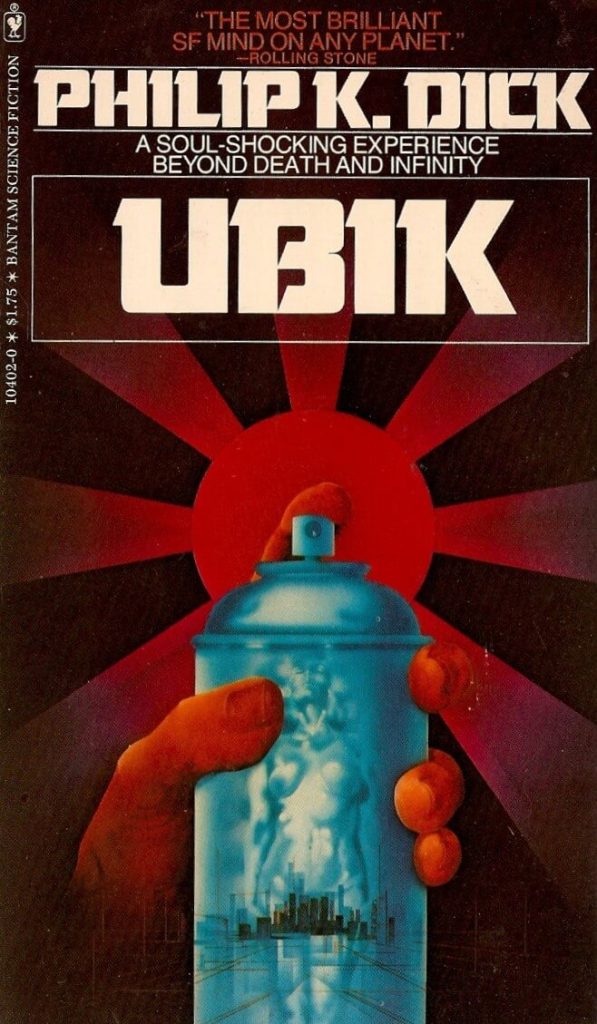
Why it belongs here: The New Wave’s engagement with altered states of consciousness, paranoia, and unstable reality finds its fullest expression in Dick… and Ubik is the fullest expression of Dick. The chapter epigraphs, each a sardonic advertisement for Ubik, are formally inventive in a way that feels entirely contemporary.
Edition: Vintage Books paperback. Paperback on Amazon | Kindle edition
Collector note: Bantam first paperback (1970) with original cover art is the collector’s target—$40-100 in Good condition.
Covered in depth in our Philip K. Dick: 10 Best Novels Ranked.
3. Slaughterhouse-Five — Kurt Vonnegut (1969)
The anti-war novel that science fiction made possible.
Billy Pilgrim has come unstuck in time. A survivor of the firebombing of Dresden, now living simultaneously in postwar America, a POW camp, and a zoo on the planet Tralfamadore where time is experienced all at once, Billy has arrived at a kind of peace with atrocity that the novel gently, devastatingly refuses to endorse.
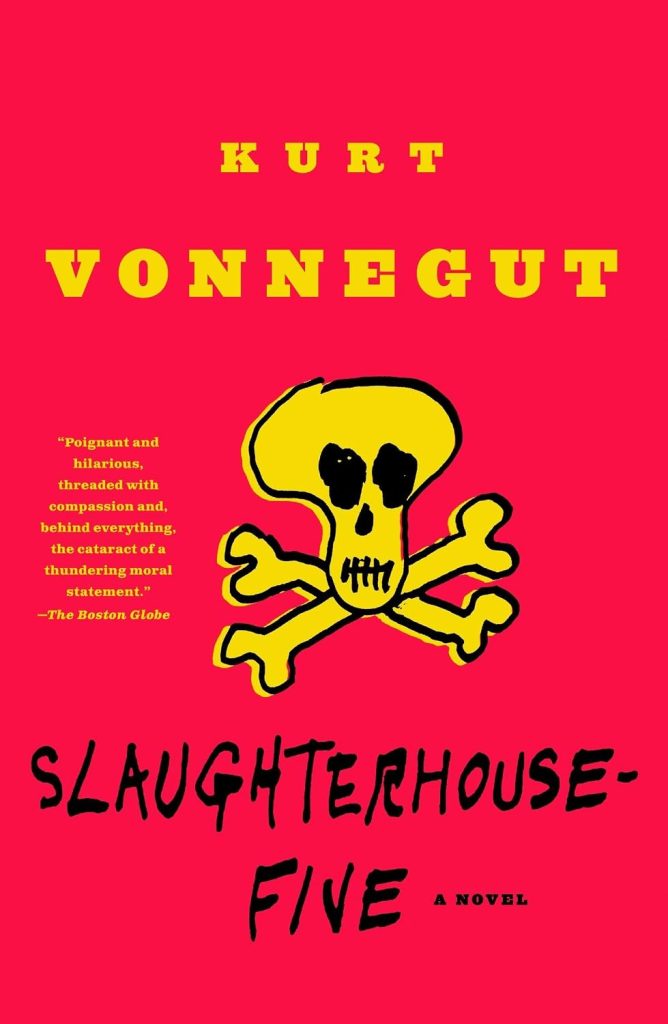
Why it belongs here: Technically sits outside genre science fiction, Vonnegut resisted the label, but the Tralfamadorian time structure is not metaphor, it’s load-bearing architecture. The novel could not exist without it. One of the most formally innovative uses of science fiction’s toolkit in the twentieth century.
Edition: Dial Press or Dell paperback. Paperback on Amazon | Kindle edition
Collector note: Original 1969 Delacorte Press hardcover is $40-100. Dell paperback editions from the early 1970s are affordable and atmospheric at $8-20.
4. The Dispossessed — Ursula K. Le Guin (1974)
The most rigorous utopia in science fiction.
Shevek, a physicist from the anarchist moon Anarres, travels to the wealthy twin planet Urras to share a theory of time that could enable faster-than-light communication… and finds himself caught between two societies, neither of which is as free as it claims to be. Le Guin subtitled it ‘An Ambiguous Utopia’ and meant every word.

Why it belongs here: Won the Hugo, Nebula, and Locus Awards. Le Guin structures the novel in alternating chapters, one strand moving forward through Shevek’s life on Anarres, one moving forward through his time on Urras, that only converge in the final pages. The structure enacts the theory at the novel’s center.
Edition: Eos or Harper paperback. Paperback on Amazon | Kindle edition
Collector note: Original 1974 Harper & Row hardcover is $30-80. Avon paperback (1975) is the early edition collectors look for at $15-35.
5. Do Androids Dream of Electric Sheep? — Philip K. Dick (1968)
What Blade Runner left out.
Bounty hunter Rick Deckard retires six escaped Nexus-6 androids in a post-nuclear San Francisco, while failing to determine whether he himself might be what he’s hunting. The film stripped away Mercerism, the empathy religion that connects all humans through a shared hallucination, and with it Dick’s central question… can manufactured empathy be meaningful?
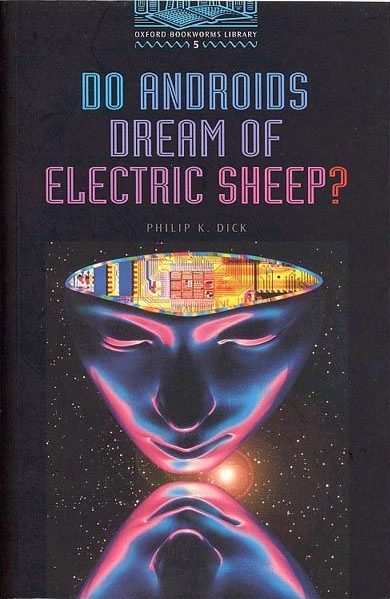
Why it belongs here: The novel that produced Blade Runner is richer, stranger, and more theologically uncomfortable than the adaptation it inspired. The android question is a New Wave question at its core: what is the self, and what happens when the self can be replicated?
Edition: Del Rey paperback. Paperback on Amazon | Kindle edition
Collector note: Signet first paperback (1969) is the collector’s edition—$30-80 in Good condition.
Covered in our Philip K. Dick: 10 Best Novels Ranked.
The Ballard Essential
J.G. Ballard was the New Wave’s prophet of inner space… a writer who believed science fiction’s proper subject was not the stars but the human unconscious. His early catastrophe novels are the best entry point.
6. The Drowned World — J.G. Ballard (1962)
Catastrophe as liberation.
Solar radiation has melted the ice caps, flooding the northern cities and pushing civilization toward the poles. Dr. Robert Kerans, stationed in a research vessel on the lagoon that was once London, finds himself drawn not toward safety but deeper into the drowned city… toward heat, dissolution, and a regression that feels more like homecoming than destruction.
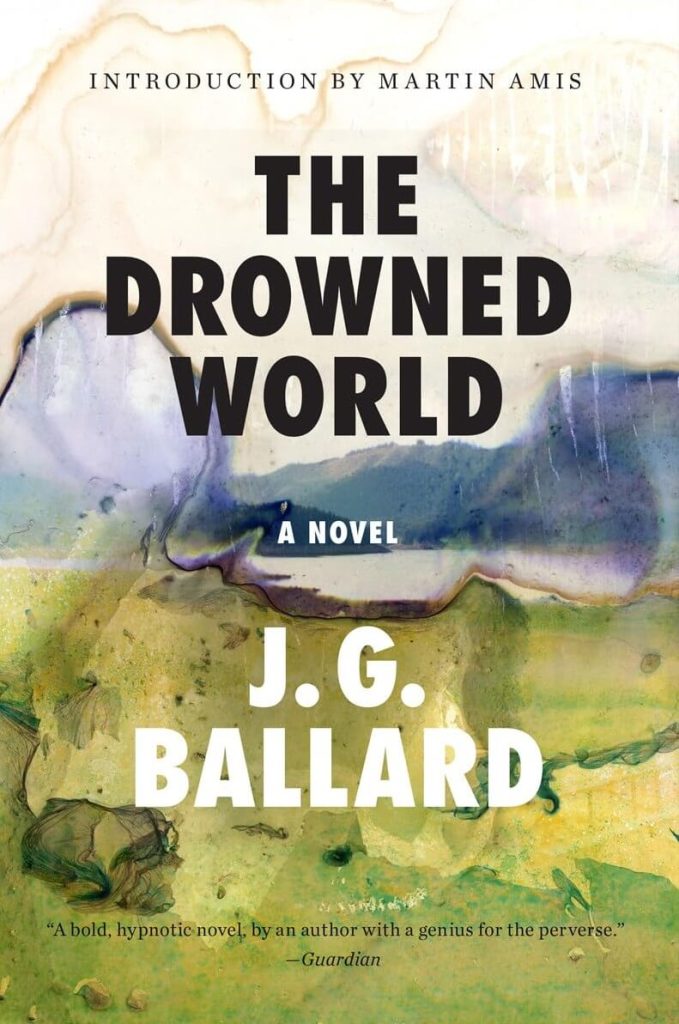
Why it belongs here: Ballard inverted the disaster novel… his characters don’t flee the catastrophe, they’re attracted to it. The drowned London is rendered with extraordinary sensory precision… the iguanas on the hotel rooftops, the algae-covered facades, the sounds of the city settling deeper into the silt. One of the most formally distinctive novels on this list.
Edition: Fourth Estate or Harper paperback. Paperback on Amazon | Kindle edition
Collector note: Original 1962 Berkley Medallion paperback (first US edition) is affordable and collectible at $20-50. UK Gollancz first edition commands $100-200.
Moorcock and the British New Wave
Michael Moorcock didn’t just write the British New Wave, as editor of New Worlds from 1964, he largely created the conditions for it. His Jerry Cornelius novels are the movement’s most provocative fictional products.
7. The Final Programme — Michael Moorcock (1968)
The spy novel the New Wave built and then blew up.
Jerry Cornelius, assassin, rock musician, physicist, fashion plate, pursues his brother through a collapsing Europe in search of a microfilm that may contain the template for the ultimate human being. The plot is cheerfully incoherent. The style is everything.
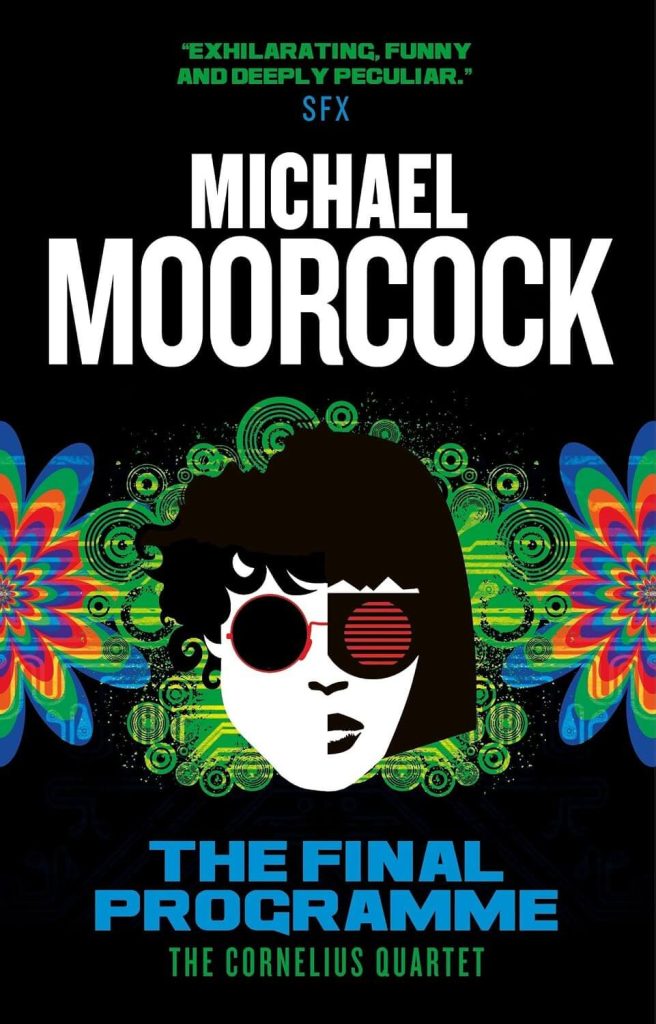
Why it belongs here: Moorcock assembled Jerry Cornelius from the detritus of popular culture, James Bond, the Swinging Sixties, quantum physics, the I Ching, and then ran it all through a blender set to high. The result is less a novel than a provocation: science fiction as pop art, as camp, as aesthetic manifesto. Deeply weird and deliberately so.
Edition: Avon or Four Walls Eight Windows paperback. Paperback on Amazon | Kindle edition
Collector note: Original 1968 Avon paperback (first US edition) is the one to find—$15-40 in Good condition.
Delany: The Most Literary of the Movement
Samuel R. Delany arrived in science fiction at 20 and immediately wrote at a level of formal sophistication the genre had rarely seen. His 1960s novels are dazzling, bewildering, and essential.
8. Babel-17 — Samuel R. Delany (1966)
Language as weapon, language as cage.
Rydra Wong, poet and cryptographer, is tasked with decoding Babel-17—a language used as a weapon by an alien enemy. As she learns the language, she begins to understand that it doesn’t just describe reality: it shapes the reality of anyone who speaks it, eliminating the concept of ‘I’ and restructuring thought itself.
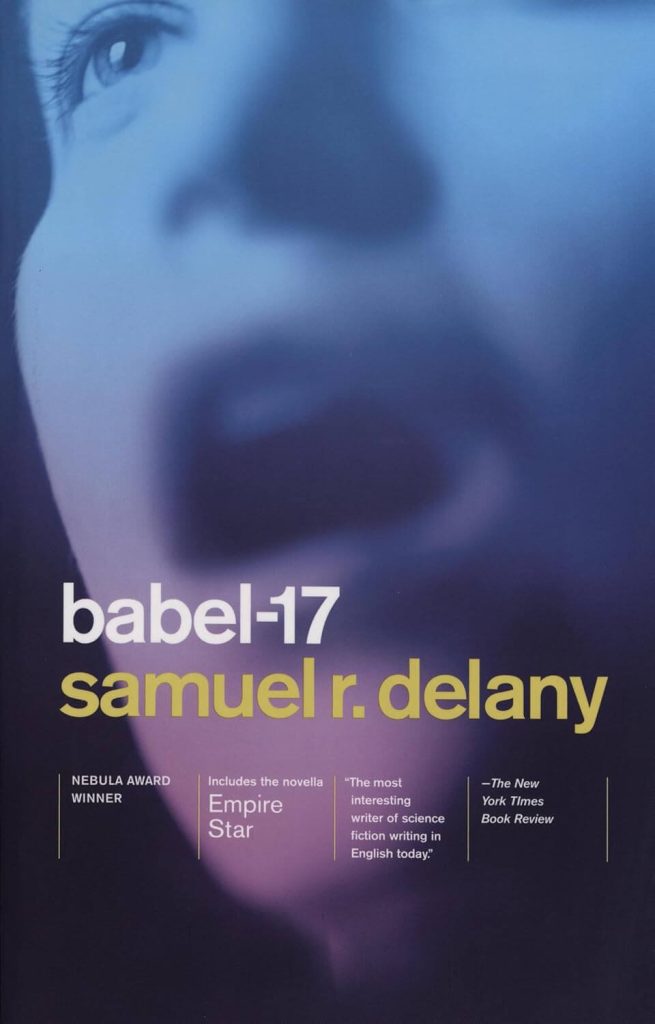
Why it belongs here: Won the Nebula Award. Delany’s engagement with linguistics, influenced by Sapir-Whorf hypothesis and structural linguistics, is entirely serious, not decorative. Babel-17 is what you get when a genuinely literary mind applies science fiction’s tools to the question of how language constructs consciousness.
Edition: Vintage Books paperback. Paperback on Amazon | Kindle edition
Collector note: Original 1966 Ace paperback (first edition) is affordable at $15-35. Often found in Good condition.
9. The Einstein Intersection — Samuel R. Delany (1967)
Myth rebuilt from the wreckage of humanity.
Alien beings have inherited the Earth, trying to live inside the mythological frameworks left behind by the vanished human race. Lo Lobey, a musician whose mutations give him strange abilities, searches for his murdered lover through a landscape of corrupted Orpheus and Billy the Kid myths, toward a confrontation with something called Kid Death.
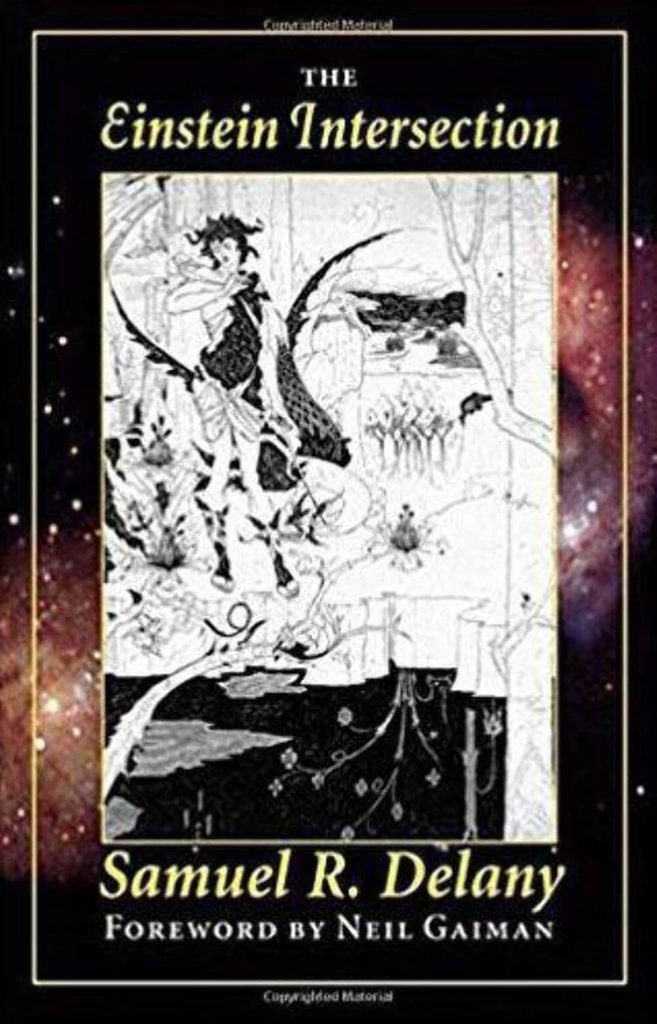
Why it belongs here: Won the Nebula Award. Delany weaves journal entries about writing the novel through the text itself… a metafictional move that was radical in 1967 and still feels bold. The mythological architecture is not arbitrary… it’s an investigation of what stories do to the beings who inherit them.
Edition: Vintage Books paperback. Paperback on Amazon | Kindle edition
Collector note: Original 1967 Ace paperback (first edition) alongside Babel-17. The two are often sold together. $15-35 each in Good condition.
Ellison and the Anthology That Changed Everything
10. Dangerous Visions — Harlan Ellison, ed. (1967)
The anthology that told science fiction it could do anything.
Thirty-three stories commissioned specifically to be unpublishable anywhere else… too sexual, too political, too violent, too strange for the magazine market of 1967. Contributors include Asimov, Heinlein, Philip K. Dick, Theodore Sturgeon, and a generation of newer writers who would define the American New Wave.
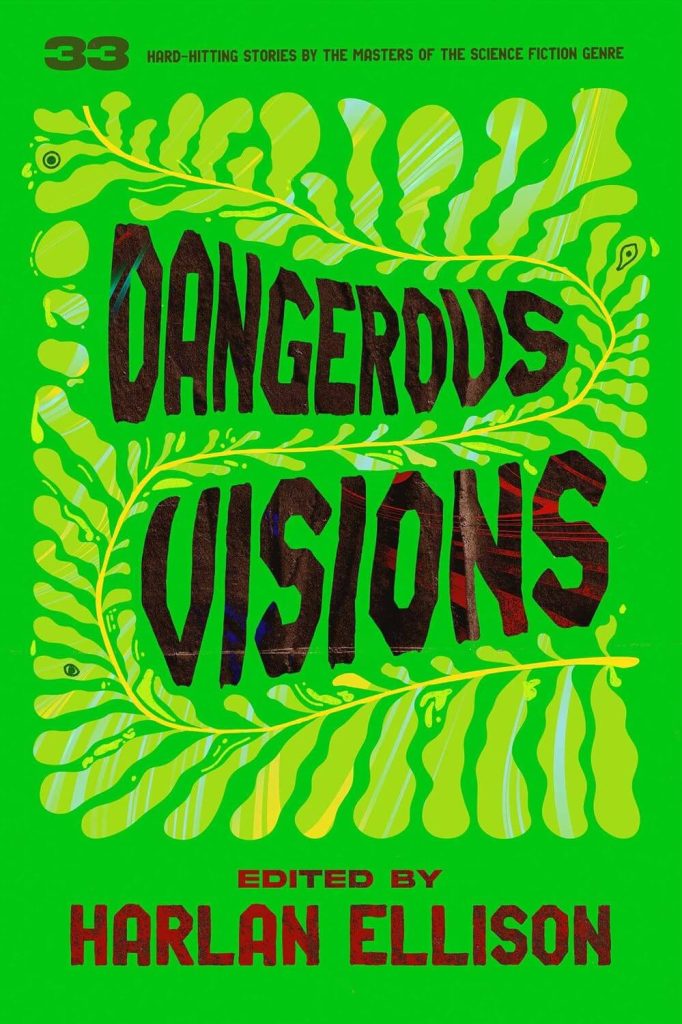
Why it belongs here: Technically an anthology, not a novel… but it belongs on this list because it is the single most important editorial act of the American New Wave. Ellison’s combative introductions to each story are worth reading as a primary document of the movement’s ambitions. The book’s arrival announced that science fiction had grown up and intended to say so loudly.
Edition: Signet or NAL paperback (abridged) or the full three-volume Doubleday hardcover. Hardcover on Amazon | Kindle edition
Collector note: The original 1967 Doubleday hardcover is a grail at $100-250. Signet paperback (abridged) is affordable at $15-35. Note: the paperback omits several stories… the hardcover is the complete text.
Silverberg’s Peak Period
Robert Silverberg wrote prolifically throughout the 1960s, then hit an extraordinary creative peak between 1970 and 1975… a run of literary science fiction that remains largely underappreciated outside serious genre readers.
11. Dying Inside — Robert Silverberg (1972)
The saddest telepathy novel ever written.
David Selig has been a telepath his whole life, able to hear the thoughts of everyone around him. Now, in his late thirties, the ability is fading… and he is discovering that losing a power he always hated may be the most devastating thing that has ever happened to him.
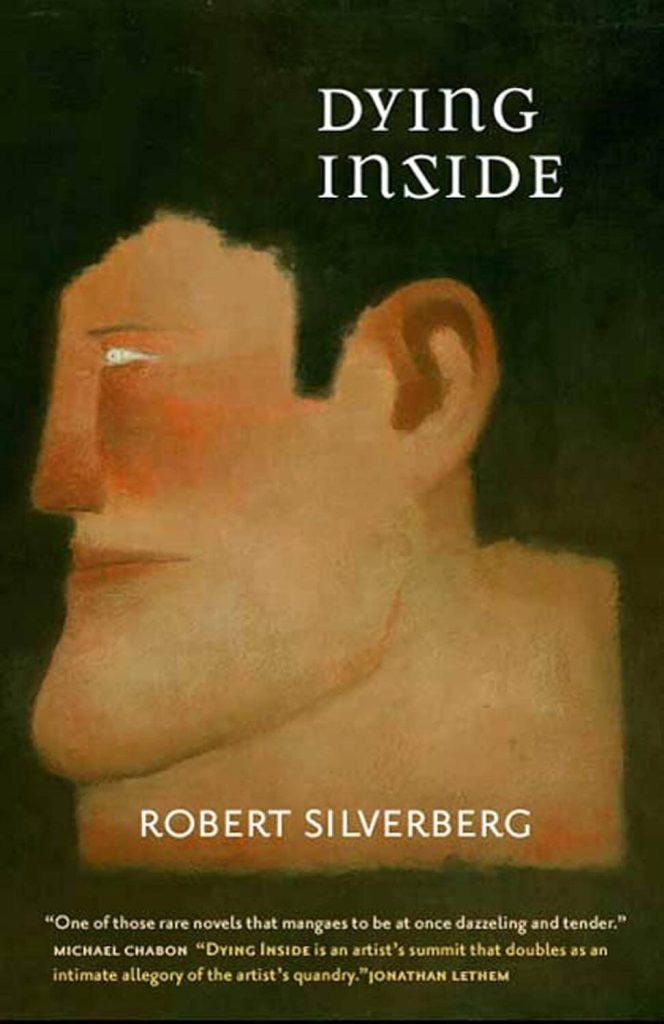
Why it belongs here: Silverberg spent the Golden Age writing fast commercial fiction and then, in his New Wave period, produced a series of novels of real literary seriousness. Dying Inside is the best of them… intimate, self-lacerating, formally inventive in its use of second-person address. The telepathy is not a plot device… it’s a metaphor for the terror of genuine intimacy.
Edition: Vintage Books or SFBC paperback. Paperback on Amazon | Kindle edition
Collector note: Original 1972 Scribner hardcover is $30-75. Ballantine paperback (1974) is affordable at $10-25.
Brunner: Social SF at Its Most Ambitious
12. Stand on Zanzibar — John Brunner (1968)
The overpopulation novel that invented a new way of writing about the future.
In 2010, the world has 7 billion people and is approaching collapse. The novel follows a cast of characters across multiple continents through a structure borrowed from John Dos Passos, fragmented chapters, news broadcasts, advertisements, stream-of-consciousness interludes, building a portrait of a civilization under terminal pressure.

Why it belongs here: Won the Hugo Award. Brunner’s formal ambition matches the scale of his subject… the fragmented, overwhelming structure is not a stylistic flourish but a direct representation of information overload. Written in 1968 about a 2010 that resembles the actual 2010 more closely than most contemporary predictions.
Edition: Arrow or Orb Books paperback. Paperback on Amazon | Kindle edition
Collector note: Original 1968 Doubleday hardcover is $30-80. Arrow UK paperback and Ballantine US paperback editions are collectible at $15-35.
Zelazny: Myth and Style
13. Lord of Light — Roger Zelazny (1967)
Hindu mythology as science fiction. Nothing else like it.
On a colonized planet, the crew of the original ship have made themselves gods… adopting the identities of the Hindu pantheon and using advanced technology to maintain their divine status over successive generations of colonists. Sam, who was once Mahasamatman, has decided this arrangement should end.
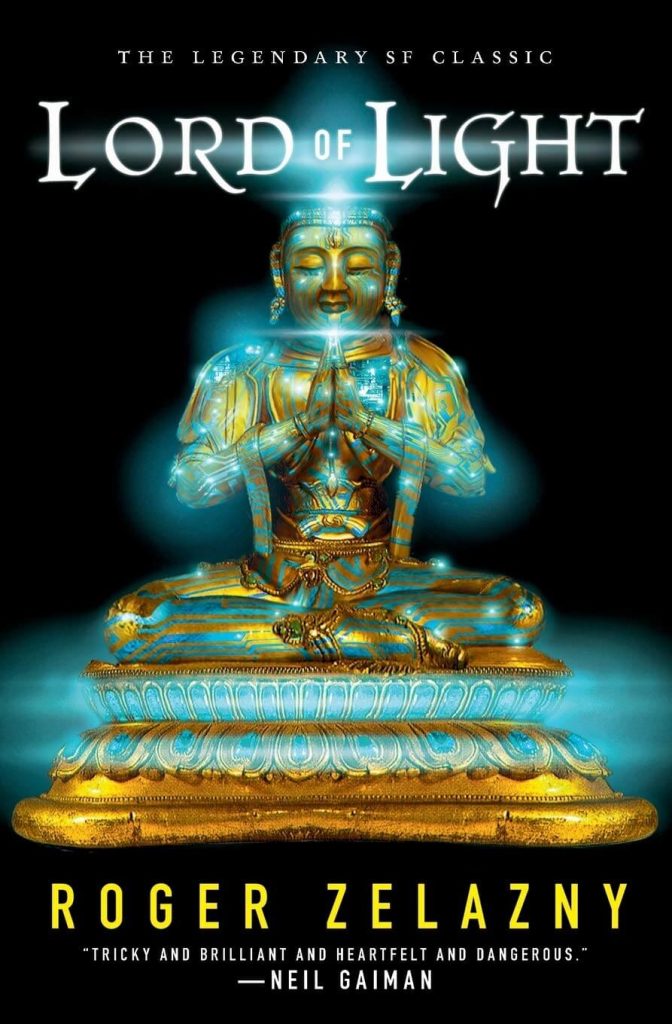
Why it belongs here: Won the Hugo Award. Zelazny writes with a compression and allusiveness unlike anyone else in the genre… scenes that should take pages are dispatched in a paragraph, and the mythological machinery is assumed rather than explained. The prose style alone makes this essential reading. It asks to be re-read.
Edition: Eos or Harper paperback. Paperback on Amazon | Kindle edition
Collector note: Original 1967 Doubleday hardcover is $50-120. Fawcett Gold Medal paperback (1969) with original cover art is affordable at $15-35.
Aldiss: The British Conscience of the Movement
14. Greybeard — Brian W. Aldiss (1964)
The quietest apocalypse in science fiction.
Nuclear testing has sterilized the human race. Decades later, the last generation of humans, now elderly, drift through an overgrown, emptying England. Algy Timberlane, known as Greybeard, travels downriver with his wife Martha toward the sea, through a landscape slowly being reclaimed by nature and by the animals that no longer fear the dwindling humans.
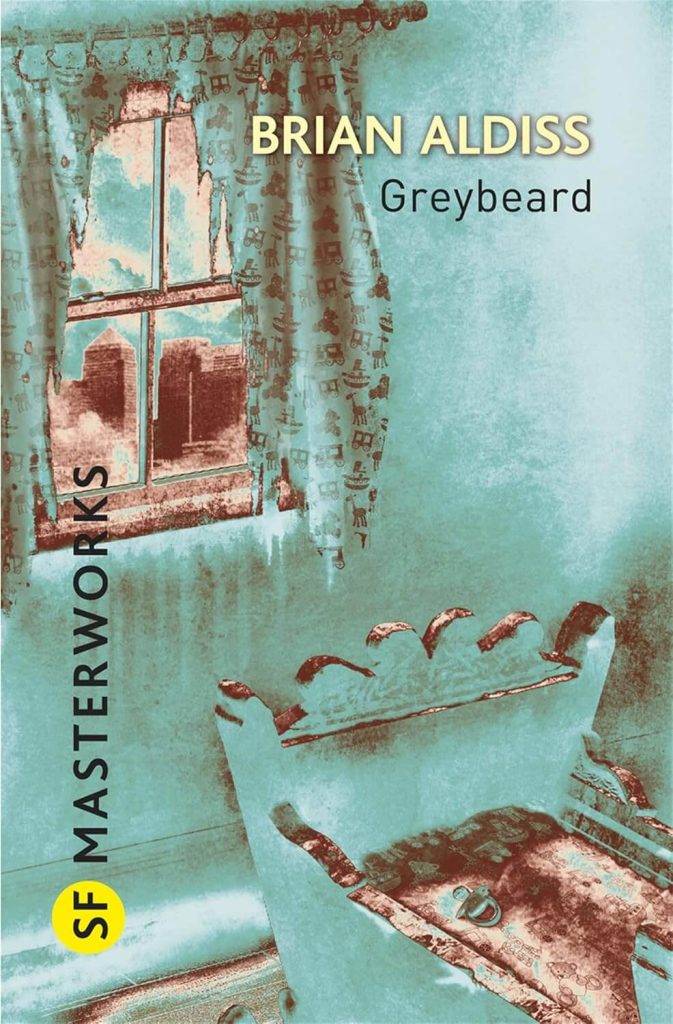
Why it belongs here: Aldiss was the British New Wave’s most consistent voice… always more interested in entropy and loss than in triumph. Greybeard is the movement’s most quietly devastating novel… not a bang but a long, gentle exhalation. The England it describes, churches filled with rooks, motorways cracked by tree roots, pubs where the landlord has been dead for years, is rendered with real elegiac beauty.
Edition: NEL or NYRB Classics paperback. Paperback on Amazon | Kindle edition
Collector note: Original 1964 Harcourt, Brace & World hardcover is $40-90. NEL UK paperback editions are the ones to find and affordable at $15-30.
The Deep Cut
This last entry is for readers who want to go further—who’ve read the anchors and the well-known names and want to know what serious collectors and scholars of the movement consider essential.
15. 334 — Thomas M. Disch (1972)
The New Wave at its most uncompromising.
A fix-up novel set in a single New York apartment building, 334 East 11th Street, across several decades of a declining future America. No heroes, no plot in any conventional sense… just lives being lived under the accumulated pressure of poverty, bureaucracy, boredom, and a welfare state that processes rather than helps.
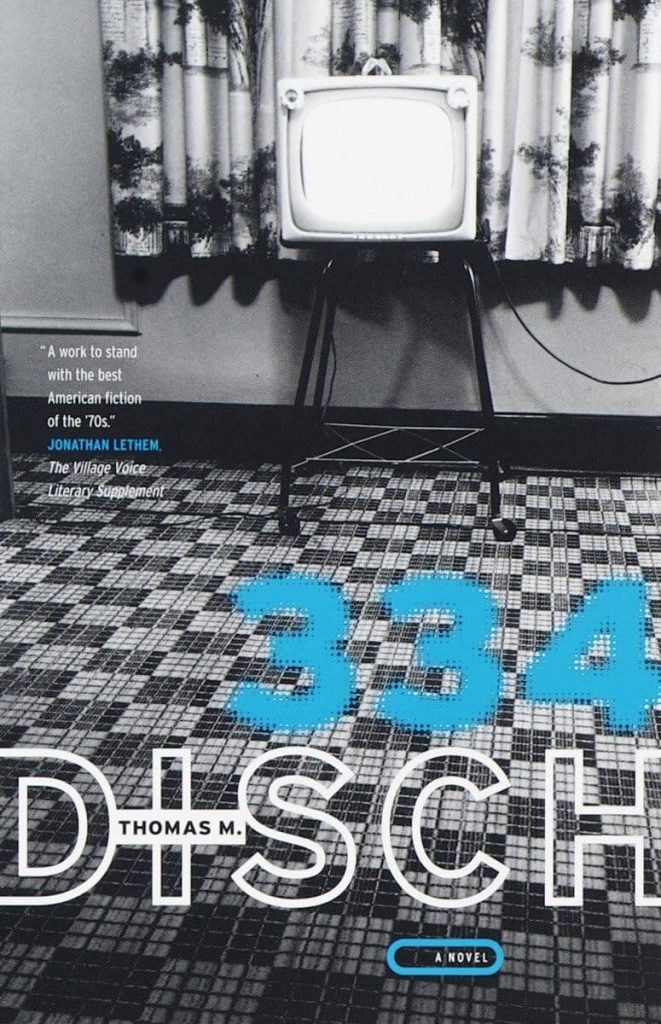
Why it belongs here: Disch was the most literary and the least commercially motivated of the American New Wave writers, and 334 is his masterpiece… formally rigorous, emotionally unflinching, and almost entirely without consolation. It is not an easy read. It is the novel on this list most likely to stay with you longest, and least likely to have been heard of by anyone you know.
Edition: Avon or Carroll & Graf paperback (where available) or used copies. Paperback on Amazon | Kindle edition
Collector note: Original 1972 Avon paperback is genuinely hard to find in good condition—budget $25-60 when you do. Worth it.
Where to Start if This List Is New to You
Fifteen novels is a lot. If you’re coming from the Golden Age list and want to understand how the New Wave felt different, read these three in this order:
- Slaughterhouse-Five (Vonnegut) — the most accessible entry point, the one most readers already know
- The Left Hand of Darkness (Le Guin) — the movement at its most achieved
- The Drowned World (Ballard) — the furthest from Golden Age conventions, the most distinctly New Wave
Those three show you the range. After them, follow whatever pulled at you most.
If you want to collect these in their original vintage editions, eBay is your best hunting ground for most of the rarer titles on this list. Our guide to buying vintage sci-fi online covers the search strategies worth knowing.
Collecting New Wave Paperbacks
A few notes for collectors specifically:
- The British New Wave titles (Ballard, Moorcock, Aldiss) often have better cover art on their UK editions… NEL and Gollancz produced some striking designs in this period. Worth searching for UK editions specifically if you care about the aesthetics.
- Delany’s Ace Doubles from the mid-1960s are among the most collectible New Wave items at still-reasonable prices. Both Babel-17 and The Einstein Intersection appeared as Ace Doubles.
- The Dangerous Visions hardcover is the serious collector’s target… the paperback abridges the text significantly.
- Disch’s 334 is genuinely scarce in good condition. If you find a reading copy, buy it. Don’t wait for a better one.
For everything you need to know about evaluating condition, storing what you find, and avoiding common buying mistakes, start with our storage and protection guide.
Related Resources
- Golden Age Science Fiction Essentials: 25 Must-Read Classics — Where the New Wave came from.
- Philip K. Dick: 10 Best Novels Ranked — The deepest dive into the movement’s most essential American writer.
- How to Start Collecting Vintage Sci-Fi Paperbacks — Build the collecting skills before you go hunting.
- Where to Buy Vintage Sci-Fi Books Online — Best sources for finding these titles.
Disclosure: As an Amazon Associate, I earn from qualifying purchases.