The first time I saw a stack of 1950s Astounding Science Fiction magazines at an estate sale, I nearly walked past them. They looked rough… yellowed pages, brittle spines, covers with creases and edge wear. “These are trashed,” I thought. Then I looked closer. March 1953. Cover art by Chesley Bonestell. Stories by Asimov, Sturgeon, and Pohl.
I flipped through…
…original ads for slide rules and correspondence courses, letters to the editor arguing about orbital mechanics, short stories that later became Hugo winners.
I bought the whole stack for $20.
Today, some of those issues are worth $30-50 each in better condition, and one…
…a first appearance issue…
…goes for $200+.
More importantly, reading them taught me something about science fiction that no modern anthology could…
…what it felt like to be a reader in 1953, discovering these stories as they were published, month by month.
Pulp magazines and digest-format sci-fi periodicals occupy a unique space in collecting. They’re fragile, sometimes hard to find, and often undervalued compared to paperbacks. But they’re also historically significant, visually striking, and surprisingly affordable if you know what to look for.

This guide will show you how to start collecting science fiction pulps and magazines:
- which titles matter,
- how to spot valuable issues,
- where to find them,
- and how to store them so they last another 70 years.
Why Collect Pulps Instead of (or Alongside) Paperbacks?
Collecting science fiction pulps and magazines offer something different from paperback collecting.
Historical Significance
Most classic sci-fi stories appeared in magazines first. Foundation by Asimov, Fahrenheit 451 by Bradbury, Flowers for Algernon by Keyes… all debuted in magazines before becoming novels. Owning the original magazine publication means owning a piece of literary history in its first form.
The Complete Package
Magazines give you context paperbacks can’t. You get the full issue… multiple stories, editorials from legendary editors like John W. Campbell or Horace Gold, letters from readers debating the science, ads for products that no longer exist, and a snapshot of what science fiction meant to readers in that specific month and year.
The Art
Cover art on pulps and digests is often spectacular. Artists like Ed Emshwiller, Frank Kelly Freas, Virgil Finlay, and Chesley Bonestell created covers that defined science fiction’s visual language. Many of these covers are considered fine art today.
Undervalued (For Now)
Compared to first-edition paperbacks, many pulps are still affordable. You can find readable copies of historically important issues for $10-30. First appearances of major stories might run $50-100. There are expensive rarities, but the barrier to entry is lower than you’d think.

The Big Titles: Which Magazines to Collect
There were dozens of sci-fi magazines over the decades. Here are the ones that matter most to collectors.
Astounding Science Fiction / Analog
Years active: 1930-present (name changed to Analog in 1960)
Why it matters: Edited by John W. Campbell from 1937-1971. Published the Golden Age greats: Asimov, Heinlein, Clarke, Van Vogt. If you only collect one title, collect this one.
Key issues: First Foundation story (May 1942), Nightfall by Asimov (September 1941), any Campbell-era issue from the 1940s-1950s.
Where to find: Astounding Science Fiction vintage issues on eBay
Price range: $10-30 for common 1950s issues, $50-150+ for key first appearances.
Galaxy Science Fiction
Years active: 1950-1980
Why it matters: Horace Gold’s magazine brought more literary, character-driven stories. Published Bester, Pohl, Simak, Sheckley. Gorgeous cover art.
Key issues: October 1950 (first issue), The Demolished Man serialization (1952), The Stars My Destination serialization (1956).
Where to find: Galaxy Science Fiction magazine on eBay
Price range: $15-40 for most 1950s issues, $75-200 for first issue or key serials.
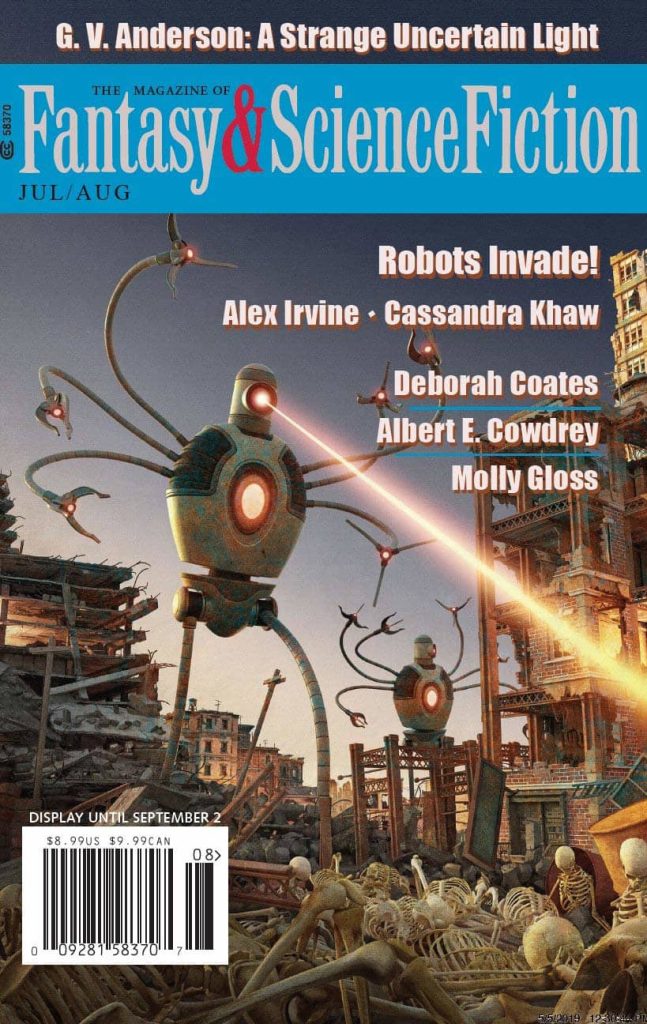
The Magazine of Fantasy & Science Fiction (F&SF)
Years active: 1949-present
Why it matters: More literary than Astounding, more fantastical than Galaxy. Published Bradbury, Le Guin, Dick, Ellison. Known for sophisticated stories and excellent cover art.
Key issues: Fall 1949 (first issue), any issue with Finlay cover art, 1960s issues edited by Avram Davidson.
Where to find: Magazine of Fantasy and Science Fiction vintage on eBay
Price range: $10-30 for common issues, $50-100 for first issue or notable stories.
Amazing Stories
Years active: 1926-2005 (sporadic after 1995)
Why it matters: The first dedicated science fiction magazine. Hugo Gernsback founded it in 1926. Early issues (1920s-1930s) are expensive and rare, but later issues are affordable and historically significant.
Key issues: April 1926 (first issue, extremely rare), 1950s issues with Frank R. Paul cover art.
Where to find: Amazing Stories pulp magazine on eBay
Price range: $500-5,000+ for 1920s-1930s issues (rare), $10-25 for 1950s-1960s issues.
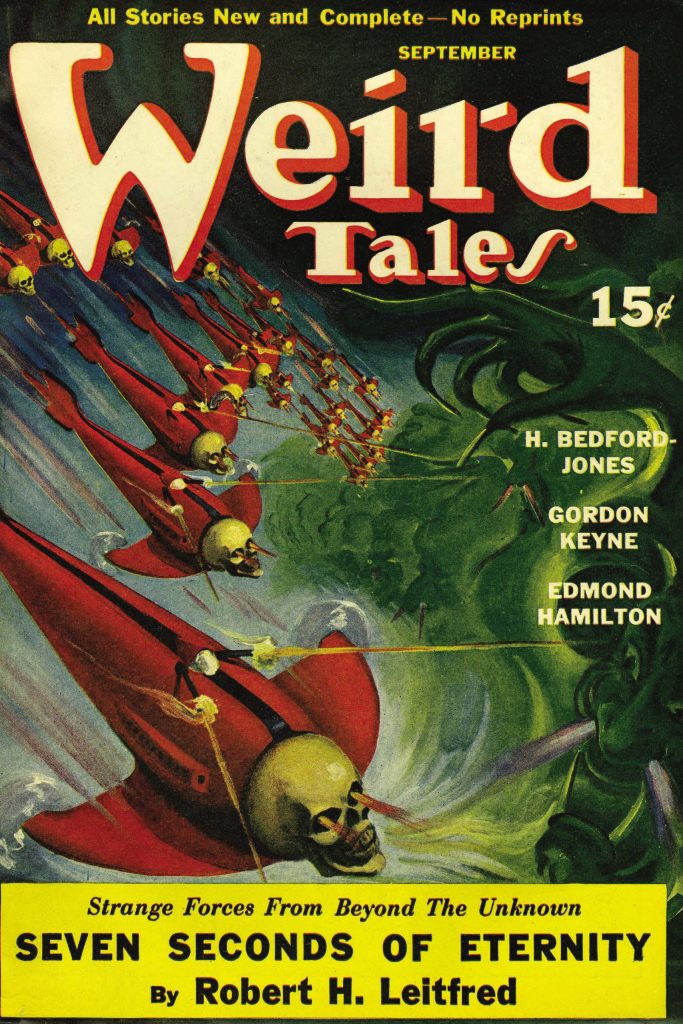
Weird Tales
Years active: 1923-1954 (original run)
Why it matters: Not strictly sci-fi (more horror/fantasy), but hugely influential. Published H.P. Lovecraft, Robert E. Howard (Conan), Clark Ashton Smith. Cover art is legendary.
Key issues: Anything with Lovecraft, especially first appearances. Margaret Brundage painted covers (1930s) are highly collectible.
Where to find: Weird Tales magazine vintage on eBay
Price range: $50-300+ for most issues, $500-2,000+ for key Lovecraft first appearances.
Other Notable Titles
If… / Worlds of If (1952-1974) – Published Harlan Ellison, Larry Niven, Philip K. Dick. Affordable and undervalued. If Magazine science fiction on eBay
Unknown / Unknown Worlds (1939-1943) – Fantasy sister magazine to Astounding. Short run makes it collectible. Unknown Worlds magazine on eBay
Thrilling Wonder Stories (1936-1955) – Classic pulp format, gorgeous lurid covers. Great for display. Thrilling Wonder Stories pulp on eBay
What Makes an Issue Valuable?
Not all vintage pulps are worth money. Here’s what affects value:
First Appearances
The most valuable issues contain first appearances of important stories or series.
Examples:
Asimov’s Foundation stories – First appeared in Astounding (May 1942 onwards). Individual issues: $100-300.
Flowers for Algernon – F&SF (April 1959). $150-300 in good condition.
Nightfall by Asimov – Astounding (September 1941). Often cited as the greatest SF short story. $200-500.
Cover Art and Artist
Issues with cover art by major artists command premium prices. Look for:
- Virgil Finlay (known for detailed pen-and-ink work)
- Ed Emshwiller
- Frank Kelly Freas
- Chesley Bonestell (astronomical art)
- Margaret Brundage (Weird Tales painted covers, 1930s)
Completeness
Condition matters, but so does completeness. Missing covers, torn-out pages, or cut coupons significantly reduce value. Always check:
- Cover attached? (Sometimes detached or missing)
- All pages present? (Flip through quickly)
- Interior ads intact? (People used to cut out coupons)
Condition Grading When Collecting Science Fiction Pulps
Pulps are graded differently than paperbacks because they’re inherently more fragile.
Fine/Very Fine (VF) – Extremely rare for pulps. Tight spine, bright cover, minimal wear. Expect to pay 2-3x normal prices.
Very Good (VG) – The realistic goal for most collectors. Light spine wear, minor edge damage, pages clean and intact. This is the sweet spot.
Good (G) – Readable but shows age. Spine creases, edge tears, some brittleness. Still collectible if the issue is rare or important. Usually 30-50% of VG price.
Fair/Poor – Heavy damage, loose pages, missing pieces. Only buy these for extremely rare issues or if you plan to have them professionally restored.
Important: Pulp paper yellows naturally over time. Yellowed pages are normal and expected—don’t downgrade an otherwise VG issue just because the pages aren’t white.

Where to Find Vintage Pulps and Magazines
Collecting science fiction pulps is harder to find than paperbacks, but the hunt is part of the fun.
eBay (Best Online Option)
eBay is the single best place to find pulps online. Thousands of listings, ranging from individual issues to complete runs.
Search strategies:
- “Astounding Science Fiction 195” (finds all 1950s issues)
- “pulp magazine lot” (sellers clearing estates)
- “Galaxy magazine vintage” (general search)
- “science fiction digest” (catches digest-format issues)
Pro tips:
- Set up saved searches with email alerts
- Check “ending soonest” daily (last-minute deals)
- Don’t ignore lots… sometimes you get 20 issues for the price of 3 individual ones
Browse current listings: Science fiction pulp magazine lot on eBay
Estate Sales and Auctions
This is where I’ve found my best deals. Someone’s grandfather collected Astounding in the 1950s, and now the estate is selling. You can get entire runs for pennies on the dollar.
How to find sales:
- EstateSales.net (search your area)
- Local auction houses
- Check photos in listings for boxes labeled “magazines” or “science fiction”
Strategy: Show up early. Bring cash. Know what you’re looking at before you bid.
Specialty Dealers and Shows
Some book dealers specialize in pulps. Prices are higher than estate sales but selection and condition are usually better.
- Attend rare book shows (dealers bring pulps)
- Search Biblio for specialty dealers
- Join pulp collecting groups (Facebook, Reddit) where members sell to each other
Used Bookstores (Long Shot but Worth Checking)
Most used bookstores don’t carry pulps because they take up space and sell slowly. But occasionally you’ll find a shop with a pulp section, usually priced affordably because the owner doesn’t know the market.
Check: Any used bookstore with a “vintage magazines” or “collectibles” section.
Storage and Protection (Critical for Pulps)
Pulps are more fragile than paperbacks, so if you’re going to spend the time collecting science fiction pulps proper storage is essential.
Magazine Bags and Backing Boards
Every pulp and digest magazine should go in an archival-quality bag with a backing board.
What to buy:
Magazine bags (polypropylene) – Size depends on format. “Standard” magazine bags fit most digest-size issues. “Golden Age” bags fit larger pulps. Find Magazine archival bags polypropylene here
Backing boards – Acid-free cardboard that prevents bending and provides support. Magazine backing boards acid free on Amazon
Cost: Bags: $0.20-0.40 each (buy in packs of 100). Boards: $0.15-0.30 each.
Budget for initial protection of 50 magazines: $20-35.
Magazine Storage Boxes
Store bagged magazines upright in archival boxes designed for magazines.
What to buy: Magazine storage boxes or “comic book boxes” (similar size). Look for acid-free cardboard with reinforced corners. Magazine storage boxes archival on Amazon
Cost: $5-12 per box. Each box holds 15-25 bagged magazines depending on thickness.
Storage Environment
Same rules as paperback storage:
- Climate controlled (65-70°F, 30-50% humidity)
- Away from sunlight (fading is irreversible)
- Avoid basements and attics (temperature/humidity swings)
- Store upright, not stacked flat (stacking stresses spines)
Monitor conditions: Digital hygrometer for storage on Amazon
Special Care for Pulps vs. Digests
Pulp-format magazines (larger, thinner paper) are more fragile than digest-format (smaller, thicker). Handle pulps with extra care:
- Always support the spine when removing from storage
- Don’t open flat… pages will crack at the spine
- Consider Mylar bags for especially valuable pulps (better than polypropylene)
Budget Guide: Starting Your Pulp Collection
You can start collecting pulps on any budget.
Budget Starter ($100-200)
Goal: 10-15 readable issues from major titles (Astounding, Galaxy, F&SF)
Where to buy: eBay lots, estate sales
Condition target: Good to Very Good
Shopping list:
- 10-15 issues: Astounding Galaxy magazine lot on eBay
- Magazine bags: Magazine bags on Amazon
- Backing boards: Magazine backing boards on Amazon
- Storage box: Magazine storage box on Amazon
Intermediate Collector ($300-600)
Goal: 30-50 issues including some key issues or complete years
Where to buy: eBay, specialty dealers, targeted estate sale finds
Condition target: Very Good for common issues, Good for rare/expensive ones
Shopping list:
- 30-50 issues: $250-450
- Magazine bags (100-pack): $25-40 Magazine bags bulk 100 on Amazon
- Backing boards (100-pack): $20-30 Magazine backing boards 100 on Amazon
- Storage boxes (3): $20-35
Serious Collector ($1,000+)
Goal: Complete runs of specific titles, first appearances, key issues
Where to buy: Specialty dealers, auctions, rare book shows, eBay for specific targets
Condition target: Very Good to Very Fine, willing to pay premium for key issues
Focus: Quality over quantity. Buy fewer issues but in better condition or with higher significance.
Common Mistakes When Starting Out
Learn from my expensive education:
Buying damaged issues “because they’re cheap” – A $5 issue with a torn cover and missing pages isn’t a deal. You’ll want to upgrade later, and damaged pulps are hard to resell.
Not checking completeness before buying – Missing covers or torn-out pages kill value. Always verify completeness, especially in lots.
Storing pulps flat in stacks – This destroys spines over time. Always store upright in boxes.
Buying without bags and boards – “I’ll get around to bagging them later.” You won’t. Buy protection supplies first, then start collecting.
Overpaying for common issues – A 1958 Astounding with no notable stories isn’t worth $40 just because it’s old. Know what you’re buying.
Collecting without focus – Pick a title or era and build depth. A complete run of Galaxy 1950-1955 is more satisfying than random issues from 20 different magazines.
Your First 10 Pulps: A Starter Collection
Here’s what I’d buy if I were to start collecting science fiction pulps today:
5 issues of Astounding (1950s) – The backbone of any pulp collection. Target: $50-100 for the lot. Astounding 1950s lot on eBay
3 issues of Galaxy (1950s-1960s) – Different flavor from Astounding, gorgeous covers. Target: $30-60. Galaxy magazine 1950s on eBay
2 issues of F&SF (any era) – Literary, sophisticated, great art. Target: $20-40. F&SF magazine vintage on eBay
Total budget: $100-200 for magazines + $20-30 for bags, boards, and one storage box.
This gives you a cross-section of the best titles, enough to figure out what you love, and a foundation for deeper collecting.
The Hunt Is Part of the Reward
Collecting science fiction pulps is different from collecting paperbacks. The magazines are harder to find, more fragile, and require more care. But they’re also more historically significant, more visually striking, and—if you’re patient—more affordable than you’d expect.
The best part? Every pulp magazine is a time capsule.
You’re not just collecting stories… you’re collecting the ads, the editorials, the letters, the whole ecosystem of science fiction in a specific month and year. When you open a 1952 issue of Galaxy, you’re experiencing science fiction the way readers did 70 years ago.
Start small. Pick a title you’re curious about. Buy a few readable issues. Bag them properly. Read them. See how it feels.
Then decide if you want to keep going. The pulps are out there, waiting in estate sales, attics, and eBay lots. Happy hunting.
Related Resources
-
- How to Start Collecting Vintage Sci-Fi Paperbacks – New to collecting? Start with paperbacks first.
- How to Store & Protect Vintage Paperbacks – Storage tips that also apply to pulps.
- Join the newsletter – Monthly pulp finds, collecting tips, and vintage sci-fi recommendations.
Disclosure: As an Amazon Associate, I earn from qualifying purchases.